
Lease Audit Software vs Lease Management Software

Most multifamily operators use software to handle leases. Fewer can say exactly what that software checks.
That gap matters, because two very different categories of tool often get grouped under the same label. Lease management software runs the day-to-day administration of a lease portfolio. Lease audit software checks whether the data inside that portfolio is actually correct. They sound similar.
They solve different problems. Some operators assume one does the job of the other. They tend to discover the difference during an audit, an acquisition, or a revenue reconciliation. That is the worst time to learn it.
This guide compares the two categories directly. It explains what each does and where they overlap. It also explains why operators focused on compliance and revenue accuracy increasingly need both.
What Lease Management Software Does
Lease management software is the system of record for a lease portfolio. It stores lease agreements, tracks lease terms, manages renewals, and keeps the administrative side of leasing organized.
A typical lease management platform handles:
- storing executed leases and amendments
- tracking lease start and expiration dates
- managing renewals and notifications
- recording rent schedules and escalations
- maintaining tenant and unit records
- generating standard financial reports
The purpose is organization and administration. Lease management software helps teams manage lease obligations at scale. It answers questions like what the lease says, when it expires, and what the resident owes.
For operators managing large portfolios, that structure is essential. Without it, tracking lease obligations across thousands of units becomes unmanageable.
But there is a limit built into the category. Lease management software records what was entered. It does not independently verify that what was entered is correct.
Say a recurring charge was never keyed in, or a concession was recorded with the wrong end date. The management system faithfully stores the error. It manages the lease. It does not audit it.
What Lease Audit Software Does
Lease audit software exists to answer a different question: is the lease data accurate?
Rather than administering leases, audit software validates them. It compares the executed lease against the rent roll, the ledger, and operational records, then flags where they disagree. Automated lease auditing software does this continuously and across the full portfolio, rather than through periodic manual spot checks.
A capable lease audit platform surfaces issues such as:
- rent that does not match the executed lease agreement
- recurring charges present in the lease but missing from the ledger
- concessions still active that should have expired
- lease terms that conflict across documents and systems
- missing or incomplete lease documentation
The distinction is validation versus administration. Lease management software is the filing cabinet.
Lease audit software is the inspector who checks that every file inside it is accurate and complete. One keeps the portfolio organized. The other keeps it correct.
Manual versions of this checking break down at scale. Our breakdown of why manual lease audits miss compliance risks explains why.
The Core Difference: Recording vs Verifying
The cleanest way to understand the two categories is through what they assume about your data.
Lease management software assumes the data entered into it is correct and builds administration on top of that assumption. Lease audit software makes no such assumption. It treats every record as something to be verified against source documents.
This is why the two categories are complementary rather than competing. A lease management system without auditing is organized but unverified. Audit software without a management system has nothing to administer. The strongest operational setups pair a management system of record with an audit layer that continuously validates it.
That pairing is where real-time lease auditing changes the equation. Traditional audits happen quarterly or at year end, long after an error has already affected revenue. Real-time lease auditing runs validation continuously. A discrepancy surfaces days after it appears, not months later during reconciliation.
Why Property Management System Integration Matters
Neither category delivers value in isolation. Both depend on connecting to the systems where lease and resident data already live.
Property management software integration is what makes the comparison possible. It lets an audit tool check lease documents against the operational reality in the PMS. Without that connection, an audit tool is working from uploads and samples rather than ground-truth data.
With it, the tool validates against the live rent roll, the actual ledger, and current resident records. Most modern audit platforms are cloud based, which is what allows this continuous, real-time connection to the systems where data lives.
Strong property management software integration also determines how much manual work the audit requires. When the audit layer reads directly from the PMS, operators avoid exporting spreadsheets, reconciling versions, and re-keying data. The integration removes the manual processes that introduce errors in the first place.
For operators evaluating either category, integration depth is one of the most important criteria. A tool that integrates cleanly with the property management system fits into existing workflows. A tool that requires parallel data entry rarely gets adopted, no matter how capable it is on paper.
Compliance: Where the Two Categories Diverge Most
The compliance dimension is where lease audit software and lease management software separate most clearly.
Lease management software supports compliance passively. It stores the documents and records that compliance depends on, and it can generate reports when asked. But it does not actively monitor whether the portfolio is meeting its compliance obligations.
Lease audit software supports compliance actively. Lease compliance monitoring continuously checks that documentation is complete, that required records exist, and that lease data aligns with regulatory requirements. Automated compliance issue detection then flags gaps before they become exposure. It does not wait for an audit or a resident dispute to surface them.
For a compliance manager overseeing a large portfolio, that difference is significant. Passive storage means compliance is only as good as the last manual review. Active monitoring means the portfolio stays audit ready continuously, because issues are surfaced and resolved as they appear.
This matters because compliance requirements in multifamily are not static. Affordable housing rules, fair housing procedures, and required disclosures all evolve. A management system holds the documents.
Fair housing obligations extend across rental housing and include protections based on race, color, national origin, religion, sex, familial status, and disability. HUD also notes that additional federal civil rights laws apply to housing and community development programs, particularly those receiving federal assistance. See HUD’s Fair Housing Rights and Obligations →
An audit system helps ensure compliance keeps pace with the obligations. It flags the compliance risks that periodic review tends to miss.
The Revenue Case for Automated Lease Auditing Software
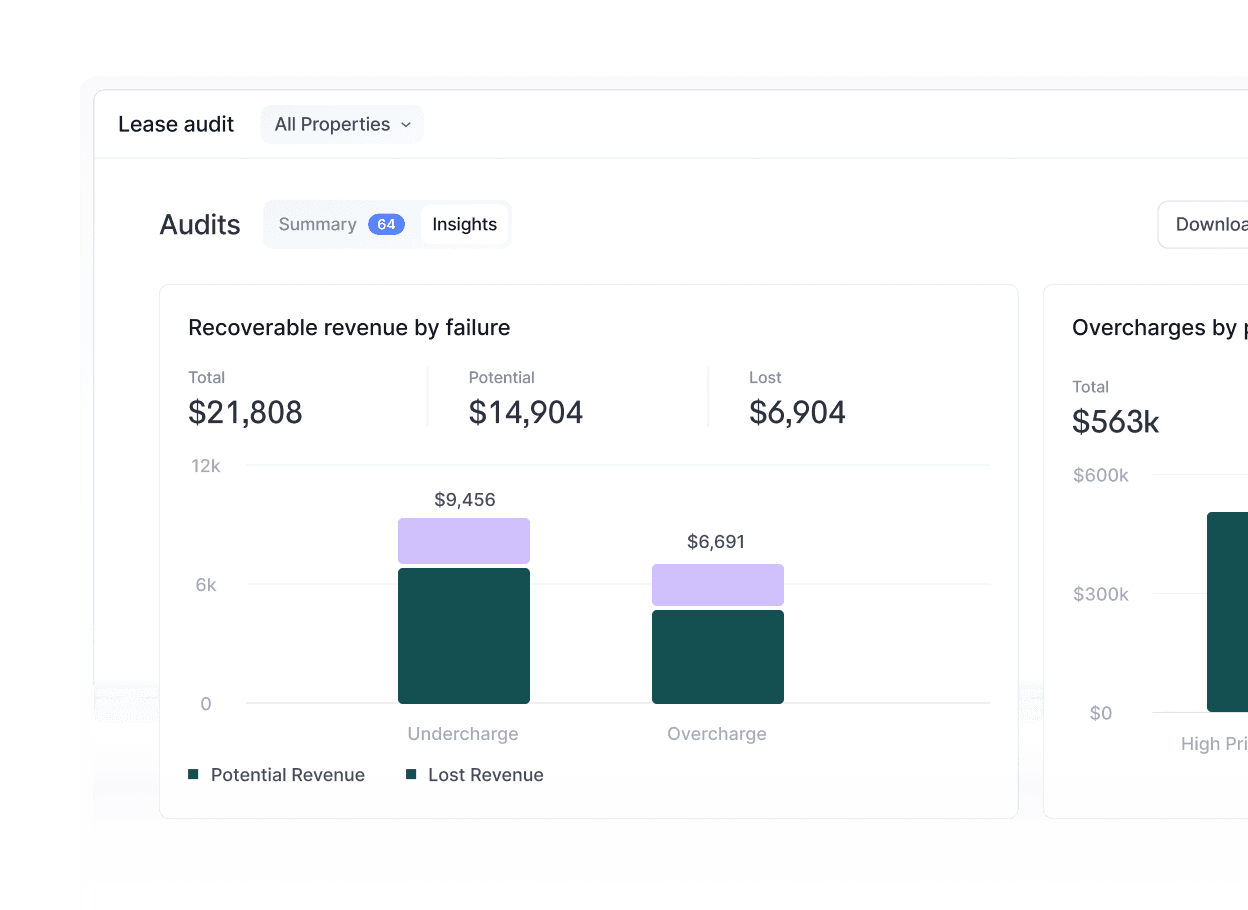
Beyond compliance, the clearest argument for automated lease auditing software is revenue.
Lease management software organizes revenue tracking. It records what residents owe and when. But it cannot tell you when the recorded amount is wrong.
Say a $75 recurring charge was written into the lease agreement but never entered into the system. The management platform shows no problem. The revenue simply goes uncollected, quietly, month after month.
Automated lease auditing software catches exactly this kind of gap. It continuously compares lease terms against what is actually being billed. That surfaces the discrepancies that erode revenue without ever triggering an alert in a management system.
The math scales quickly. A single missed charge is minor. The same systematic error repeated across a large portfolio becomes material.
Reliable portfolio reporting depends on consistent and verifiable property-level information. NCREIF’s Accounting Committee specifically promotes consistency, transparency, and verifiability in accounting and reporting for institutional real estate assets at both the individual-property and portfolio levels. See NCREIF’s Accounting Committee standards for institutional real estate reporting.
Across thousands of units, the small discrepancies add up. Errors in recurring charges, concessions, or rent amounts become real money over the long term. Tracking lease data for accuracy, not just organization, is what protects that revenue.
When You Need Each
The practical question for most operators is not which category wins. It is which they already have and which they are missing.
Most operators already run lease management software. It is the foundational system of record, and few portfolios function without one. What many lack is the audit layer. They administer leases well but never independently verify the data those leases contain.
The signs that you need lease audit software alongside your management system include:
- revenue that does not reconcile with lease terms
- compliance reviews that turn up surprises
- acquisitions where lease data cannot be trusted at face value
- recurring charges that vary between the lease and the ledger
- audit preparation that consumes weeks of manual work
If any of these are familiar, the gap is not in lease management. It is in lease auditing.
Choosing Software That Fits Operational Reality
The decision framework is straightforward once the categories are clear. That holds for commercial real estate operators and multifamily teams alike.
Judge lease management software on how well it organizes and administers the portfolio. That means document storage, renewal tracking, reporting, and record-keeping. Judge lease audit software on how well it validates. That means accuracy of discrepancy detection, depth of property management software integration, real-time monitoring, and compliance coverage.
The best outcome for operational efficiency is not choosing one over the other. It is a management system of record paired with an audit layer that keeps it honest. The management system organizes the portfolio. The audit system ensures the organized data is actually correct.

Where SurfaceAI Fits
SurfaceAI is not a lease management system. It does not replace the platform where you store and administer leases. It is the audit layer that validates the data those systems contain.
SurfaceAI reads lease documents and compares them against rent rolls and operational records. It surfaces the discrepancies that affect revenue and compliance. It provides automated lease auditing software built for multifamily portfolios. Its property management software integration lets it validate against live data rather than samples.
For operators who already have lease management software but lack continuous validation, SurfaceAI fills exactly that gap. The management system keeps the portfolio organized. SurfaceAI keeps it accurate. For product context, see the SurfaceAI Lease Audit Agent →
If your team wants continuous lease compliance monitoring and revenue-accurate auditing across the portfolio, book a demo. You will see how SurfaceAI validates the data your management system stores.
Conclusion
Lease audit software and lease management software are not competitors. They are two halves of a complete operational picture.
Lease management software organizes the portfolio. Lease audit software verifies it. One assumes the data is correct.
The other proves whether it is. For multifamily operators focused on compliance and revenue accuracy, the management system is necessary but not sufficient. The audit layer is what turns an organized portfolio into a verified one.
The operators who understand the difference stop asking which tool to buy. They pair the two, and they stop losing revenue and compliance ground to errors their management system was never designed to catch.
Frequently Asked Questions About Lease Audit Software vs Lease Management Software