
Real Estate Analytics Companies: A Practical Guide

The real estate industry has never had more data.
Every property generates thousands of data points. Those data points live across leases, rent rolls, resident files, inspections, maintenance requests, financial reports, and compliance documents. But the abundance of information does not translate into answers. Many owners and operators still struggle to answer basic operational questions quickly and confidently.
The challenge is no longer collecting data. The challenge is turning that data into actionable insights.
That’s where real estate analytics companies come in.
Modern property analytics platforms help multifamily organizations transform raw data into insights that improve decision-making, reduce risk, increase efficiency, and strengthen portfolio performance.
This guide covers three things. It explains how real estate analytics platforms work, breaks down the different categories of analytics solutions, and lays out what to look for when evaluating technology partners.
What Are Real Estate Analytics Companies?
Real estate analytics companies develop software and data platforms that help owners, operators, investors, and asset managers analyze property performance.
Rather than simply storing information, these platforms help users understand:
- what is happening
- why it is happening
- where problems exist
- what actions should be taken
Analytics has become an essential capability for organizations managing multiple properties and large portfolios across the real estate sector.
Why Analytics Matters More Than Ever
Multifamily organizations operate across multiple systems.
Information may exist within:
- property management systems
- accounting software
- lease documents
- resident files
- maintenance platforms
- compliance systems
- spreadsheets
- acquisition records
- public records
While each data source contains valuable information, they rarely provide a complete picture on their own. Analytics platforms connect this information into meaningful operational insights.
Commercial real estate generates an overwhelming number of data points across occupancy, rents, property performance, market conditions, and economic indicators. According to Green Street, effective analytics starts with picking the right metrics. That means identifying what matters at the sector, market, and individual asset levels.
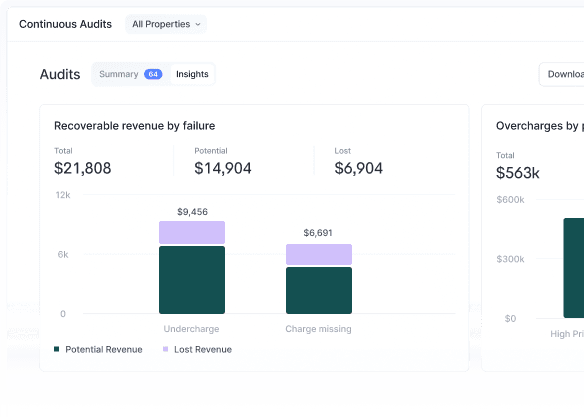
What Is a Property Analytics Platform?
A property analytics platform combines information from multiple sources to provide centralized reporting, analysis, and decision support.
Instead of manually reviewing reports from different systems, operators gain a consolidated view of portfolio performance.
These platforms typically support:
- operational reporting
- financial analysis
- portfolio dashboards
- occupancy trends
- rent performance
- maintenance metrics
- compliance monitoring
- forecasting
The objective is to improve visibility and enable faster decision-making with real time data.
Types of Real Estate Analytics Platforms
Not all analytics platforms solve the same problems. The category spans everything from a basic real estate data service to a full real estate intelligence platform. Understanding the different categories helps organizations select the right solution.
Business Intelligence Platforms
Business intelligence platforms aggregate operational and financial data into dashboards and reports.
They help leadership monitor occupancy, NOI, collections, expenses, leasing activity, and portfolio performance. These platforms answer the question: “What happened?”
Property Intelligence Software
Property intelligence software goes beyond reporting by connecting multiple operational data sources.
These platforms help operators identify inconsistencies, exceptions, operational risks, missing information, and emerging trends. Instead of simply displaying metrics, they explain what requires attention.
Real Estate Predictive Analytics Companies
Predictive analytics solutions use historical and current data to estimate future outcomes.
Examples include occupancy forecasting, turnover prediction, maintenance planning, delinquency forecasting, and revenue projections. These tools support proactive decision-making rather than reactive reporting. Many rely on ai and machine learning to spot patterns humans would miss.
Estate Research Platforms
Estate research platforms focus on market intelligence.
They often provide demographic data, market trends, comparable properties, rental market analysis, and investment research. These platforms are particularly valuable during acquisitions and market expansion. A strong estate research platform online supports real estate investment decisions across individual properties and portfolios. They also inform property valuations and give visibility into market conditions.
For a related look at data providers themselves, see our guide to property data providers →
What Makes a Strong Real Estate Data Platform?
The value of an analytics platform depends on more than attractive dashboards. The strongest platforms share several important characteristics.
Connected data. Analytics should combine information from multiple systems. Disconnected reports create blind spots.
Accurate information. Poor-quality data leads to poor decisions. The best platforms validate information rather than simply displaying it.
Actionable insights. Operators should understand where problems exist, why they occurred, and what actions to prioritize. The best property data software turns records into decisions rather than just reports.
Scalability. Analytics should continue providing value as portfolios expand. Organizations managing hundreds of properties require different capabilities than those managing a handful of assets.
Why Traditional Reporting Isn’t Enough
Many organizations already receive reports from their property management system.
But reports alone rarely answer critical operational questions.
Traditional reporting tells teams what has been entered into the system. It does not verify whether that information is complete, accurate, or consistent across different data sources.
For example:
- Does the rent roll match the signed lease?
- Are required documents missing?
- Are recurring charges reflected correctly?
- Are lease amendments properly recorded?
- Are compliance records complete?
Answering these questions requires real estate data intelligence, not just reporting. Property managers and real estate professionals need data driven insights they can act on.
AI and advanced analytics are becoming a larger part of real estate technology investment. According to IDC, 66% of surveyed real estate companies were investing in data and analytics, including AI. The investment supports operational and sustainability priorities
The Rise of AI in Real Estate Analytics
Artificial intelligence is transforming how analytics platforms operate.
AI reduces the dependency on manual review. It can identify anomalies, compare large datasets, detect inconsistencies, classify documents, prioritize exceptions, and uncover hidden operational risks.
This lets teams spend less time searching for issues and more time resolving them. AI is shifting analytics from descriptive reporting toward intelligent decision support.

Where SurfaceAI Fits in the Analytics Landscape
SurfaceAI represents a new generation of property intelligence software built specifically for multifamily operations.
SurfaceAI is not a traditional reporting dashboard. It analyzes operational records across multiple systems to identify issues that impact revenue, compliance, and portfolio performance.
SurfaceAI helps organizations:
- compare lease documents against rent rolls
- identify lease discrepancies
- detect missing documentation
- surface compliance exceptions
- uncover revenue leakage
- support acquisition due diligence
- improve portfolio-wide operational visibility
This lets operators move beyond static reporting and focus on the issues that require immediate attention. It creates a stronger foundation for long term data-driven decision-making across multifamily portfolios.
For product context, see the SurfaceAI Document Management Agent and Lease Audit Agent →
How to Evaluate Real Estate Analytics Companies
When comparing analytics platforms, ask the following questions.
Does the platform integrate with existing systems? The best solutions complement your existing technology stack.
Does it validate data or simply display it? Operational accuracy matters as much as reporting.
Can it identify exceptions automatically? Teams should not have to manually review every record.
Is the platform designed for multifamily? Industry-specific workflows produce more meaningful insights. Generic BI tools built for real estate agents or general commercial use often miss multifamily-specific nuances.
Can leadership view portfolio-wide performance? Centralized visibility becomes increasingly important as organizations scale.
The Future of Property Analytics
The next generation of analytics platforms will focus less on creating reports and more on helping operators take action.
Artificial intelligence will keep expanding what analytics can do. That includes identifying operational risks, predicting future outcomes, automating reviews, prioritizing work, strengthening compliance, and improving portfolio performance.
Organizations that successfully combine analytics with operational intelligence will gain a significant competitive advantage.
Conclusion
Real estate analytics companies play an increasingly important role in helping multifamily organizations make faster, more informed decisions.
The most valuable platforms do more than aggregate data. They validate information, uncover hidden risks, and provide actionable insights that improve operational and financial performance.
Portfolios keep growing in size and complexity. Analytics will become a core capability, not a competitive advantage.
If your team wants to move beyond static dashboards and gain deeper visibility into lease accuracy and revenue leakage, book a demo. SurfaceAI helps multifamily operators turn fragmented property data into actionable intelligence.
Frequently Asked Questions About Real Estate Analytics Companies