
AI Tools for Property Investment Analysis in 2026

AI tools for property investment are becoming more important. Real estate investors face tighter underwriting, faster deal timelines, and more complex operating data.
For years, investment analysis relied on spreadsheets, broker packages, market reports, and manual diligence. Those tools still matter. But they are no longer enough on their own.
Investors now need faster ways to evaluate:
- market fundamentals
- rent assumptions
- operating risk
- lease accuracy
- revenue leakage
- acquisition upside
- portfolio performance
This is where AI for real estate investors is becoming valuable.
The strongest AI tools do not replace investment judgment. They help teams analyze more information, test assumptions faster, and identify risks earlier.
For broader investment context, see AI tools that create an investor edge →
Why AI Is Becoming More Important in Property Investment
Real estate investment decisions depend on large amounts of information. This includes market data, rent rolls, lease documents, and operating statements. Sales comps, debt assumptions, and asset-level reports round out the picture.
The challenge is not just collecting it. The challenge is interpreting it quickly enough to make a confident decision.
AI tools for real estate investors reduce manual review and identify patterns. They also surface exceptions that may not be obvious in summary reports. This matters most in competitive acquisitions where teams need to move fast without weakening diligence.
AI adoption in commercial real estate is accelerating. 72% of CRE companies have adopted AI technologies. AI tools have reduced property valuation time by up to 70%. And 41% of CRE investment firms have integrated AI analytics platforms.
According to Crexi, adoption is moving fastest in lease abstraction, underwriting, and investment analytics. The professionals building AI fluency now will see the gap show up in deal velocity and earnings within three to five years.

The Main Types of AI Tools for Property Investment
Not every AI tool solves the same problem. The category includes several different platforms.
1. AI Market Analysis Tools
These tools help investors evaluate location, demand, pricing, and market movement. They support analysis around rent trends, employment growth, supply pipeline, and submarket performance. They are useful early in the investment process, when teams are deciding whether a market is worth pursuing.
2. AI Modeling Tools for Real Estate
These tools help investors test assumptions faster. They support rent growth scenarios, expense forecasting, property valuation, sensitivity analysis, and downside-case analysis.
Modeling is most valuable when it helps teams understand how different assumptions affect return on investment. The risk is overconfidence. A model is only useful if the underlying data is accurate.
3. Lease and Rent Roll Analysis Tools
For multifamily acquisitions, rent roll and lease data can materially affect underwriting.
AI tools help review lease terms, rent discrepancies, concessions, renewal dates, missing fees, and billing inconsistencies. This is where investment analysis overlaps with operational diligence.
For related workflows, see rent roll to lease reconciliation for multifamily M&A →
4. Predictive Analytics Tools
Predictive analytics tools help investors forecast future outcomes, including rent growth, occupancy, market risk, and asset performance.
These tools improve investment planning. But teams should not treat them as certainty. Predictive analytics should support underwriting judgment, not replace it.
5. Automated Real Estate Investing Platforms
Automated real estate investing platforms make parts of the investment process faster or more systematic. This may include deal sourcing, automated screening, risk scoring, and acquisition workflow automation. Institutional teams are increasingly applying similar automation to acquisitions and asset management.
How AI for Real Estate Investing Improves Decision-Making
Faster initial screening. AI helps teams review more investment opportunities without analyzing every deal in depth.
Better assumption testing. AI driven modeling tools help investors compare scenarios quickly across base, downside, and aggressive cases.
Stronger hidden risk identification. AI tools identify lease discrepancies, concession issues, billing gaps, and rent roll conflicts. These issues affect underwriting accuracy and post-close performance.
More consistent diligence. AI helps standardize review logic across deals and portfolios.
Improved portfolio visibility. AI tools also support asset management after acquisition by helping teams monitor operating trends.
Why AI Tools Are Not a Replacement for Underwriting Discipline
AI can accelerate analysis. It cannot remove investment judgment.
Investors still need to understand local market context and current market conditions. Asset quality, business plan feasibility, financing risk, and exit assumptions all require human judgment.
The best use of AI is not to automate judgment. It is to make judgment better informed.
AI ROI is still uneven. Only 7% of leaders report achieving established ROI from AI. Yet nearly one in four face pressure to prove value to investors. The KPMG Global AI Pulse reports that the organizations that succeed have clear accountability and strong cost visibility.
AI is no longer just a technical capability. It is a cost, margin, and operating model priority. Human oversight and financial discipline determine whether AI investments create real value or just add complexity.
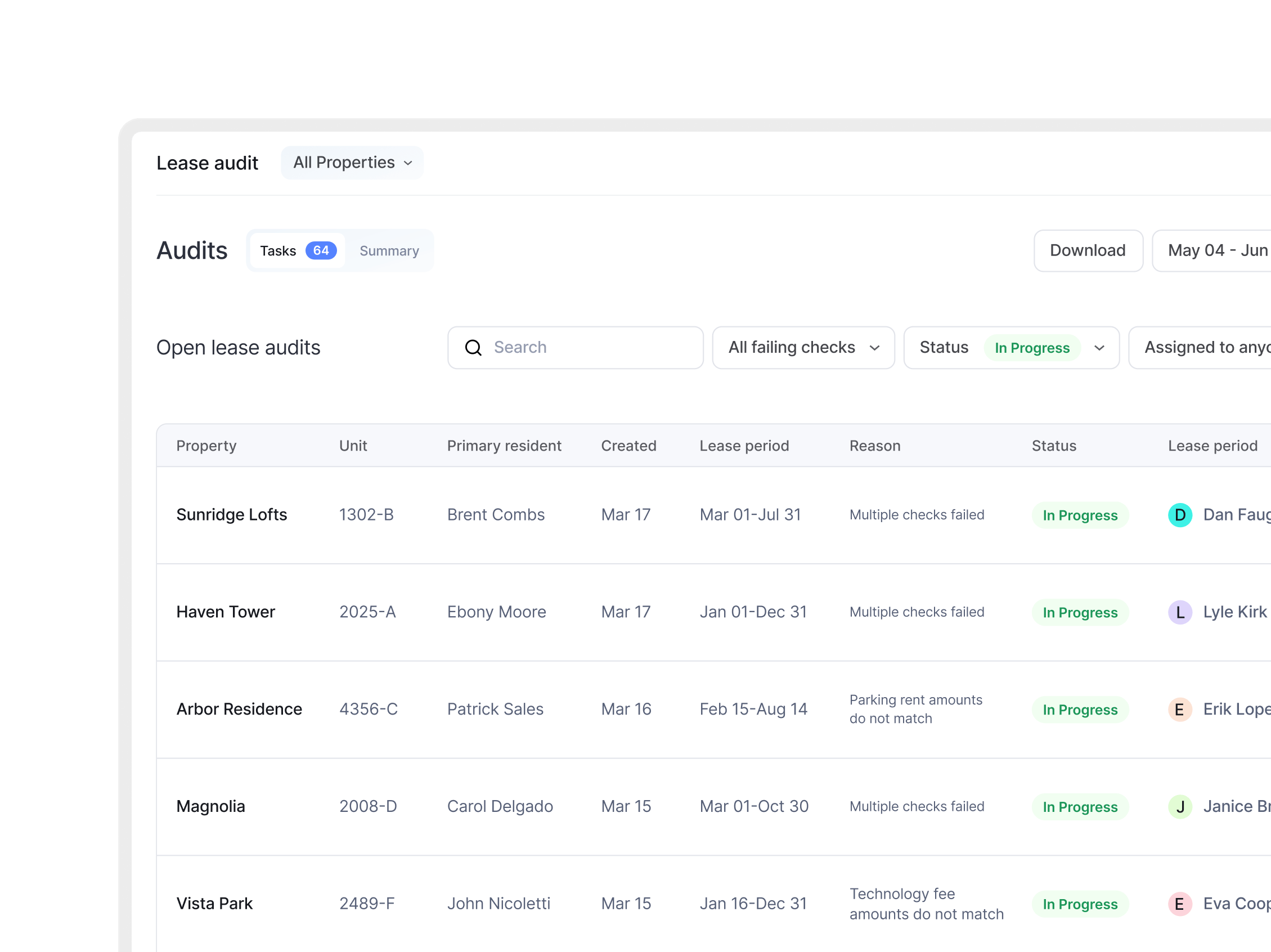
Where SurfaceAI Fits in Property Investment Analysis
SurfaceAI helps multifamily investors validate asset-level operating data before decisions are made. It is not a generic modeling tool or market data platform. It supports the diligence and operational intelligence layer behind investment decisions.
We help acquisitions and asset management teams:
- analyze lease documents at scale
- compare lease terms against rent rolls and PMS data
- identify revenue leakage
- surface hidden lease risks
- validate underwriting assumptions
- support faster multifamily lease due diligence
This is valuable when investment teams need to know whether the asset’s operating data supports the deal model.
For diligence evaluation criteria, see how to evaluate AI lease due diligence platforms. Teams using a structured hidden lease risk checklist get even more value out of AI-driven analysis.

“I'm really loving lease audits. Very user friendly. Very black and white - tells you that this is exactly what you need to fix. Instead of having search for a needle in the haystack.”
Gary Robbins, Transitions Manager
AI Tools vs Traditional Analysis Tools
Traditional tools remain central to real estate investing. The difference is that AI tools help teams process and validate more information faster.
Traditional tools answer:
- What does the model say?
- What is the expected return?
- What does the market report show?
AI tools go further:
- What assumptions may be wrong?
- What data needs validation?
- What risks are hidden in the lease files?
- What operating issues could affect NOI?
That shift is what makes AI for real estate investors more strategic.
How Investors Should Evaluate AI Tools
Data quality. Can the tool work with real operating data, lease documents, and property records?
Workflow fit. Does it support how acquisitions and asset management teams already work?
Explainability. Can users understand why the tool flagged an issue?
Integration. Can it connect with the systems where investment data already lives?
Risk detection. Does it help identify issues that affect underwriting or valuation?
Scalability. Can it support multiple deals and large portfolios?
Common Mistakes When Using AI for Real Estate Investing
Treating AI outputs as final answers. AI should support analysis, not replace review.
Ignoring source data quality. Inaccurate lease or rent roll data produces unreliable output.
Using generic AI for specialized workflows. Generic generative AI tools may not understand lease structures, concessions, or rent roll logic.
Focusing only on deal sourcing. The bigger value is often in validating the deal, not finding it.
Separating diligence from underwriting. Diligence findings should flow back into the investment model.
Key Takeaway
AI tools for property investment are changing how investors analyze markets, model returns, validate assumptions, and evaluate acquisition risk.
The strongest tools do not replace underwriting judgment. They improve the information behind it.
Conclusion
AI in real estate is moving beyond basic automation. Investment teams are using AI to analyze markets, improve modeling, review lease data, and identify hidden risks faster.
The real value comes when AI strengthens the accuracy of the underlying investment thesis.
If your team is evaluating AI tools for property investment, book a demo. SurfaceAI supports smarter multifamily investment analysis with stronger visibility into lease risk and operational data.
Frequently Asked Questions About AI Tools for Property Investment Analysis