
Due Diligence in Mergers and Acquisitions: Types and Process for Real Estate

Every acquisition begins with a promise.
The seller presents an asset that appears to meet certain financial, operational, and legal expectations. The buyer agrees to pay based on those expectations.
Due diligence is the process that determines whether those expectations are supported by evidence.
In mergers and acquisitions (M&A), due diligence helps buyers verify the quality of an investment before committing capital. The term is often associated with corporate transactions, but the same principles apply to real estate acquisitions. Investors need to understand more than financial performance. They also need to understand the operational, contractual, regulatory, and legal risks that could affect future value.
For multifamily portfolios, that means reviewing far more than income statements. Many sources feed the complete picture of the asset. Lease documentation, resident records, vendor contracts, compliance obligations, and operational data all contribute.
This guide covers three things. What due diligence in mergers and acquisitions means, the different types of due diligence involved, and how the process applies to modern real estate transactions.
What Is Due Diligence in Mergers and Acquisitions?
Due diligence in mergers and acquisitions is the structured investigation conducted before completing a transaction.
Its purpose is straightforward. It verifies that the information supporting an acquisition is accurate, complete, and free from material issues that could affect value or increase risk.
Rather than relying solely on information presented during negotiations, buyers independently validate the business or asset they intend to acquire.
In real estate, this means confirming that the property’s financial performance, documentation, contractual obligations, and operations align with the assumptions used during underwriting.
Ultimately, due diligence reduces uncertainty and enables an informed decision.
Due diligence remains a critical component of real estate acquisitions as investors evaluate financial, legal, operational, and asset-level risks before committing capital. According to PREA, comprehensive due diligence is essential for understanding investment risks. It supports informed acquisition decisions throughout the transaction process.
Why Due Diligence Matters in Real Estate Acquisitions
Unlike many business acquisitions, multifamily transactions involve physical assets supported by thousands of operational records. A corporate merger or acquisition might center on human resources, intellectual property, and strategic fit. A real estate M&A transaction centers on the asset and the records that document its performance.
A property’s value is influenced by more than its purchase price or projected cash flow.
It also depends on factors such as:
- lease accuracy
- occupancy quality
- contractual obligations
- maintenance history
- regulatory compliance
- operating procedures
- resident documentation
If these areas contain inaccuracies or inconsistencies, the buyer may inherit unexpected costs after closing. Strong due diligence helps identify these potential risks before ownership changes hands. For the full acquisition lifecycle, see our guide to real estate acquisitions →
The Main Types of Due Diligence in Mergers and Acquisitions
Every transaction is unique, but most acquisitions include several core types of due diligence.
Financial Due Diligence
Financial due diligence examines whether reported financial performance reflects reality.
Typical review areas include:
- historical operating statements
- rent collections
- expense trends
- capital expenditures
- debt obligations
- cash flow
- net operating income (NOI)
This analysis helps buyers understand the financial health of the asset.
Legal Due Diligence
Legal due diligence focuses on ownership rights and contractual obligations.
Review areas commonly include:
- title documentation
- purchase agreements
- litigation
- easements
- zoning
- service contracts
- insurance
- permits
The objective is to identify legal issues that could affect ownership or future operations.
Operational Due Diligence
Operational due diligence evaluates how the property functions on a day-to-day basis.
Examples include:
- property management practices
- staffing
- maintenance operations
- resident workflows
- vendor relationships
- operational controls
Strong operations often reduce future execution risk.
Commercial Due Diligence
Commercial due diligence evaluates the property’s position within its market.
This includes:
- local demand
- competitive properties
- demographic trends
- occupancy trends
- rental growth
- future supply
Understanding market dynamics helps buyers assess long term investment potential.
Technical Due Diligence
Technical due diligence examines the physical condition of the asset.
Typical reviews include:
- building systems
- roofs
- HVAC equipment
- electrical systems
- plumbing
- environmental assessments
- deferred maintenance
Unexpected capital expenditures can significantly affect projected returns.
Tax Due Diligence
Tax due diligence reviews the tax obligations and exposures tied to the asset.
This often includes:
- property tax history and reassessment risk
- transfer taxes
- tax abatements or incentives
- entity structure implications
Tax findings can materially change the after-tax return on an acquisition.
Compliance Due Diligence
Compliance due diligence evaluates whether the property operates in accordance with regulatory and contractual requirements.
This often includes reviewing:
- affordable housing documentation
- fair housing requirements
- resident disclosures
- inspection records
- policy documentation
- licensing obligations
Strong compliance reduces legal and operational exposure after acquisition. For a deeper look at this area, see our guide to compliance due diligence →

The Due Diligence Process for Acquisitions
Every transaction follows its own timeline, but most acquisitions move through similar stages.
Step 1: Define the Scope
The acquisition team identifies what needs to be reviewed based on the property type, transaction size, and investment strategy. Review priorities are established before documentation is requested.
Step 2: Collect Documentation
The seller provides supporting information such as:
- lease agreements
- rent rolls
- financial statements
- vendor contracts
- inspection reports
- insurance records
- compliance documents
This information forms the basis of the review.
Step 3: Validate Information
The next step is verification. Rather than accepting documents at face value, buyers compare information across multiple sources.
Examples include:
- lease agreements versus rent rolls
- resident records versus occupancy reports
- recurring charges versus billing records
- contracts versus financial statements
The goal is to identify inconsistencies before closing. For a structured approach, see our due diligence review checklist →
Step 4: Assess Risk
Once findings are identified, acquisition teams evaluate:
- financial impact
- operational impact
- legal exposure
- compliance implications
- remediation requirements
Not every issue changes the investment decision. The objective is understanding which findings materially affect value, weighing the risks and opportunities each one represents.
Step 5: Support Negotiation and Closing
Due diligence findings often influence:
- purchase price
- contractual protections
- closing conditions
- escrow requirements
- transition planning
The process continues until both parties have sufficient confidence to complete the transaction. Findings are typically summarized in a due diligence report that guides the final decision.
Common Challenges During Due Diligence for Acquisitions
Despite advances in technology, acquisition teams continue to encounter recurring obstacles.
Large volumes of documentation. Multifamily acquisitions frequently involve thousands of leases and supporting records. Managing this information manually consumes significant time.
Fragmented data. Information often exists across property management systems, shared drives, spreadsheets, and document repositories. Reconciling multiple data sources increases complexity.
Inconsistent records. Lease amendments, recurring charges, and resident files may not always align with operational systems. These discrepancies require further investigation before closing.
Tight transaction timelines. Competitive markets often compress due diligence periods. Teams must evaluate significant amounts of information without sacrificing accuracy.
Technology is reshaping due diligence by enabling faster document review, better collaboration, and more structured transaction workflows. According to Ansarada, AI-powered due diligence tools help transaction teams organize information and identify risks earlier. Intelligent data rooms and automated document analysis improve the efficiency of M&A reviews.
How Technology Is Improving Due Diligence
Modern acquisition teams increasingly rely on software to improve both efficiency and consistency.
Instead of manually reviewing every document, technology can help:
- organize transaction records
- classify lease documents
- compare information across systems
- identify missing documentation
- detect inconsistencies
- prioritize exceptions for review
These capabilities let professionals spend more time evaluating risk and less time locating information.
Where Modern AI Platforms Add Value
Artificial intelligence has expanded the role of due diligence software beyond simple document storage.
AI can now assist by:
- extracting structured information from lease documents
- validating lease terms against operational records
- identifying anomalies across large portfolios
- highlighting incomplete documentation
- surfacing discrepancies that warrant investigation
For multifamily acquisition teams, this means reviews become more focused and scalable without replacing professional judgment.
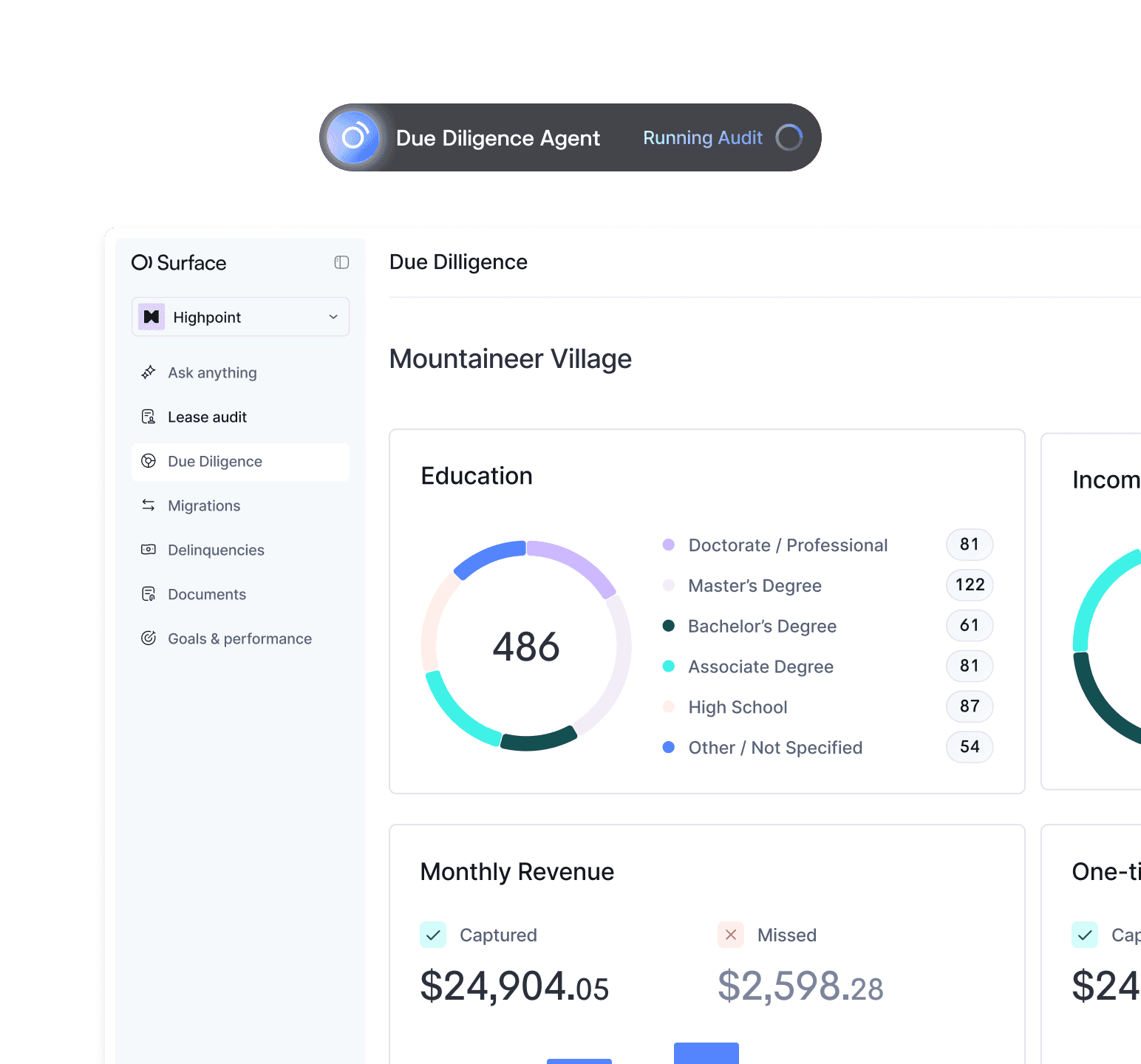
SurfaceAI builds on this approach. It helps teams validate lease documentation, reconcile operational records, and surface exceptions that may influence underwriting or post-close performance. For product context, see the SurfaceAI Due Diligence Agent and Document Management Agent →
Best Practices for Due Diligence Success
Organizations that consistently execute successful acquisitions typically follow several principles:
- establish a standardized review framework
- involve legal, financial, operational, and asset management teams early
- validate information rather than relying on reported figures
- prioritize material risks based on potential impact
- maintain organized documentation throughout the transaction
- use technology to improve consistency across large portfolios
These practices reduce uncertainty while supporting better investment decisions.
The Future of Due Diligence in Real Estate
Real estate transactions continue to generate more data every year.
As portfolios become larger and acquisition timelines become shorter, manual review alone is no longer sufficient.
Technology is shifting due diligence from document collection toward intelligent validation. Acquisition teams expect more than record gathering now. They expect systems to identify inconsistencies, prioritize risks, and provide greater confidence in the information supporting investment decisions.
Organizations that embrace this approach will be better equipped to evaluate opportunities efficiently while maintaining rigorous review standards.
Conclusion
Due diligence for acquisitions is about far more than checking documents before closing.
It is a structured process that helps buyers understand financial performance, operational quality, legal obligations, and compliance risks before committing capital.
In multifamily real estate, thousands of records support every transaction. Effective due diligence requires three things working together: experienced professionals, standardized processes, and modern technology that can validate information at scale.
If your acquisitions team wants to improve due diligence efficiency and reduce the time spent manually reviewing lease and operational records, book a demo. SurfaceAI helps bring greater confidence and consistency to multifamily acquisitions.
Frequently Asked Questions About Due Diligence in Mergers and Acquisitions