Software Solutions for Managing Mixed Residential and HOA Portfolios

Managing a single property type is already complex. Managing a mixed portfolio is harder.
Residential rentals, multifamily assets, HOA communities, condos, and other managed properties often require different workflows, reporting structures, compliance rules, communication needs, and owner expectations.
That creates a practical software problem.
A system that works for apartment operations may not fully support HOA administration. HOA-focused platforms often miss the rental side. They may not give rental operators enough visibility into leases, rent rolls, billing, documents, or property-level performance.
Mixed portfolios raise the bar on software selection. Property management teams need to evaluate software solutions for managing mixed portfolios residential HOA more carefully than a standard property management software search.
The right platform does several things at once. It centralizes administration, organizes property records, produces customizable reports, and manages compliance. It also scales across different property types without creating disconnected workflows.
For broader category context, see multifamily property management software →
Why Mixed Residential and HOA Portfolios Are Hard to Manage
Mixed portfolios create complexity because each property type has different operating needs.
Residential property management solutions often focus on:
- leasing
- rent collection
- resident records
- maintenance
- renewals and lease renewal workflows
- owner reporting
- vacancy marketing
HOA and community management workflows often focus on:
- board communication
- association dues
- architectural requests
- violations
- community documents
- meeting records
- owner communications
- compliance tracking
When one team manages both workflows, systems often become fragmented.
Common issues include:
- separate systems for each property type
- inconsistent reporting across properties
- manual filing and document storage
- limited centralized dashboard visibility
- duplicate data entry
- different compliance processes
- difficulty scaling as portfolios grow
A strong software system should reduce that complexity, not add another layer of it.
What Does Property Management Software Do in a Mixed Portfolio?
At its core, property management software helps teams centralize and manage operational workflows across properties.
For mixed residential and HOA portfolios, the software should support:
- property administration
- resident and owner records
- rent or dues tracking
- maintenance requests
- lease and document storage
- compliance workflows
- communications
- reporting
- accounting support
- centralized dashboards
- portfolio-level visibility
The goal is not just to digitize tasks. The goal is to help teams manage different property types through one consistent operating structure.
The need for connected systems is increasing as real estate teams adopt more technology across operations. Market Research Intellect notes that the property management and real estate software market is being driven by rapid digitalization, cloud-based platform adoption, and the need for greater operational efficiency across leasing, accounting, tenant communication, and maintenance workflows. See Market Research Intellect’s property management and real estate software market analysis →
Core Features Mixed Portfolios Need
Centralized Dashboards for All Properties
Property management software centralized dashboards for all properties are especially important when teams manage multiple asset types.
A good dashboard should show:
- property status
- open tasks
- maintenance issues
- compliance items
- occupancy or ownership records
- document gaps
- financial activity
- unresolved exceptions
The dashboard should help regional managers, portfolio leaders, and operations teams understand what needs attention across the full portfolio.
Customizable Reports
Property management software customizable reports are essential because mixed portfolios rarely use one reporting format.
A residential owner may want leasing, rent, vacancy, and expense reports. An HOA board may want dues, violations, reserve activity, meeting records, and maintenance updates.
A scalable software platform should let teams produce different reports without rebuilding the workflow manually every time.
Useful report types include:
- property performance reports
- owner statements
- HOA board reports
- delinquency reports
- maintenance reports
- compliance reports
- document status reports
- portfolio rollups
Property Administration Software
Property administration software helps teams manage the back-office workflows that keep a portfolio organized.
This may include:
- owner records
- resident records
- vendor information
- service requests
- lease documents
- HOA documents
- policy records
- recurring tasks
- approvals
- communications
For mixed portfolios, administration matters because missing records and unclear ownership quickly create operational friction.
Property Management Filing System
A property management filing system is often overlooked, but it becomes critical at scale.
Mixed portfolios generate a large volume of documents:
- leases
- addenda
- owner agreements
- HOA bylaws
- board minutes
- violation letters
- maintenance records
- insurance documents
- inspection reports
- financial statements
- resident communications
If these files are scattered across email, drives, portals, and local folders, teams lose time and confidence.
A strong filing system should help teams:
- classify documents
- match files to properties, owners, residents, or units
- control versions
- identify missing records
- maintain audit trails
- support compliance review
For document-specific workflows, see document workflow automation for real estate →
Compliance Management
Property management compliance software is especially useful for mixed portfolios because compliance requirements vary by property type.
For residential rentals, compliance may involve:
- lease documentation
- resident notices
- deposit records
- fair housing workflows
- inspection documentation
- billing accuracy
For HOA portfolios, compliance may involve:
- governing documents
- board approvals
- owner notices
- violation tracking
- architectural review workflows
- meeting records
The system should help teams track requirements clearly and surface issues before they become larger problems.
Automation Across Property Types
An automated property management system reduces manual work across recurring workflows.
Examples include:
- reminders
- approval routing
- maintenance assignment
- document collection
- reporting workflows
- compliance alerts
- renewal or dues notifications
- exception tracking
Automation delivers the most value when it supports consistency across different property types. It should not force every asset into the same exact workflow. That is how teams build a streamlined operational model.
What Makes Software Scalable for Mixed Portfolios?
Scalable property management software should support portfolio growth. It should not force teams to rebuild the operating model every time they add a new property or HOA.
Important scalability factors include:
- multi-property dashboards
- flexible property types
- role-based permissions
- configurable reports
- document management
- compliance tracking
- accounting integrations
- owner and resident communication tools
- workflow automation
- centralized data structure
This matters especially for real estate software for large property owners and platforms for managing multiple property management companies.
As growing portfolios expand, software should reduce complexity rather than make every property feel like a separate business.

How to Evaluate Top Property Management Software Solutions
Broad searches produce broad lists. Terms like top rated property management software, top property management systems, top property management software companies, and top 10 property management software return generic results. Property management software reviews and a list of property management software can also help, but a top 5 property management software ranking rarely accounts for portfolio complexity.
Mixed portfolios need a more practical evaluation method. Instead of choosing based on rankings alone, evaluate systems against your operating reality.
1. Property Type Coverage
Can the platform support:
- residential rentals
- multifamily properties
- HOA communities
- condos
- mixed-use assets
- commercial units, where applicable
If the system only handles one property type well, it may create workarounds for the rest.
2. Reporting Flexibility
Can the system produce different reports for owners, boards, operators, asset managers, accounting teams, and regional managers?
Mixed portfolios need reporting flexibility.
3. Centralized Visibility
Can leadership see all properties in one place? A strong system should reduce the need for separate spreadsheets and manual rollups.
4. Document Management
Can the platform organize files by property, unit, resident, owner, HOA, document type, status, and date? Many systems become difficult to manage at scale on this dimension.
5. Compliance Workflows
Can the platform support different compliance needs across residential and HOA assets? Compliance should be trackable, reportable, and visible.
6. Integration Capabilities
Can the platform connect with the rest of your stack? Key integrations include accounting systems, payment tools, resident and owner portals, reporting tools, document systems, and operational intelligence layers. Integrations matter because disconnected systems create manual work.
7. Support and Implementation
Searches like “which property management platform has the best reviewed customer support” matter because implementation quality affects adoption.
A strong property management tool should provide clear onboarding, responsive support, training resources, implementation guidance, and migration support. The best software is only valuable if teams actually use it.
Technology adoption also matters in HOA and community association workflows. CAI’s industry research notes that association management software has helped teams automate payments, communications, accounting, maintenance requests, and financial reporting. See CAI’s community association management trends report →
Best Property Management Software for Marketing Vacant Units
For residential portfolios, vacancy marketing can be a major workflow.
Useful features include:
- listing syndication
- availability tracking
- prospect management
- showing coordination
- application workflows (from prospect to sign leases to lease signed)
- leasing funnel visibility
But for mixed portfolios, vacancy marketing should not be the only evaluation priority. A platform may excel at marketing vacant units. But it may fall short on HOA administration, document management, compliance, or portfolio reporting.
The right decision depends on the full portfolio mix.
Financial Planning Tools That Integrate With Property Management Data
Financial planning tools that integrate with property management data help owners and operators connect operations to portfolio planning.
Useful workflows include:
- budget planning
- cash flow forecasting
- reserve planning
- expense tracking
- capital project planning
- NOI monitoring
- dues or rent collection forecasting
For mixed portfolios, financial planning should be flexible enough to support both rental income and association-style reporting.
This is another reason integrations matter. Property data, accounting data, compliance status, and document records should not sit in separate systems with no clear connection. Connected data helps leadership make informed decisions faster.
Why Property Management Software Reviews Need Context
Residential property management software reviews can help, but they are not always enough.
A top-rated platform may excel in one segment. It might work well for single-family rentals, small landlords, HOAs, multifamily operators, or commercial property managers. But it may not fit a mixed residential and HOA property management business.
When reading reviews, operators should look for evidence around:
- portfolio size
- property type mix
- reporting needs
- support quality
- implementation complexity
- integration depth
- document management strength
- compliance functionality
The most useful review is not the one with the highest rating. It is the one that resembles your operating environment.
Where SurfaceAI Fits in Mixed Portfolio Operations
SurfaceAI is not a traditional HOA management platform or general property administration system.
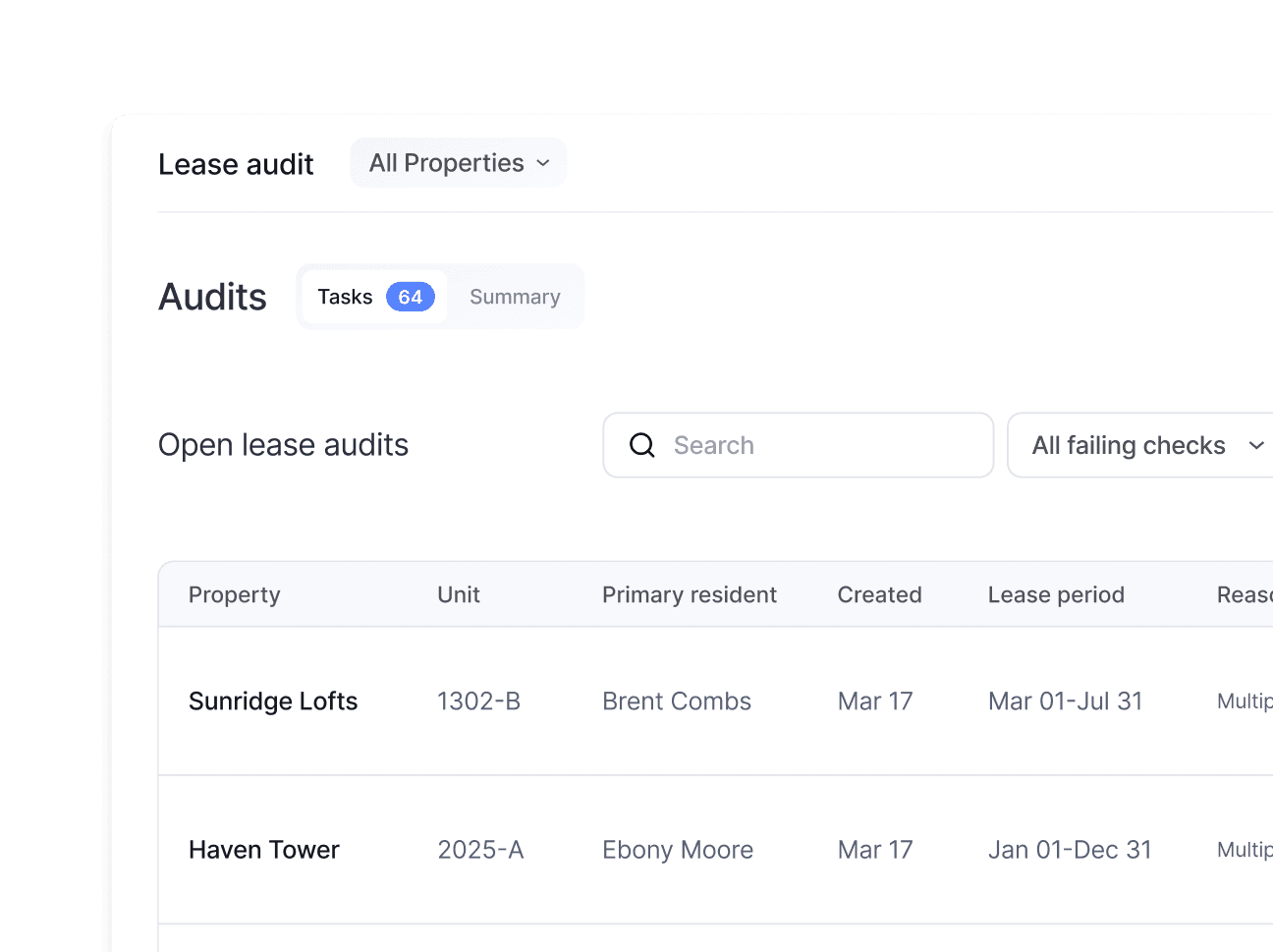
SurfaceAI sits in the operational intelligence layer. It helps property teams build stronger confidence in lease, document, rent roll, and compliance data.
For mixed portfolios with residential or multifamily assets, SurfaceAI helps teams:
- compare lease documents against PMS and rent roll records
- identify missing or incomplete lease files
- detect revenue-impacting discrepancies
- surface compliance exceptions
- support document classification and review
- improve visibility across acquisition or takeover workflows
- strengthen data confidence inside reporting and operational systems
SurfaceAI works alongside property management software rather than replacing it. This matters most for large portfolios and management companies. They already have core systems in place. But those systems still need better validation across the documents and records they rely on.
For product context, see the SurfaceAI Document Management Agent and Lease Audit Agent →
How Mixed Portfolios Should Build Their Software Stack
A strong mixed-portfolio stack usually includes:
Core property management system. Handles rent, dues, residents, owners, work orders, accounting workflows, and communications.
Owner or resident portals. Support communication, payments, maintenance requests, documents, and updates.
Document management layer. Organizes leases, HOA records, compliance files, resident records, board documents, and operating documents.
Reporting and dashboard layer. Gives leadership visibility across all properties and property types. For deeper reporting workflow context, see our guide to asset management software for multifamily reporting →
Compliance layer. Tracks requirements, exceptions, documentation, and resolution status.
Operational intelligence layer. Validates whether the records inside the systems are accurate, complete, and aligned.
This structure helps teams manage complexity without expecting one system to solve every problem perfectly.
Common Mistakes When Choosing Software for Mixed Portfolios
Choosing based on a generic top 5 list. These lists are often too broad and do not account for portfolio complexity, property type mix, or operational workflows.
Prioritizing one property type too heavily. A system that works well for rentals may not support HOA workflows, and the reverse is also true.
Ignoring reporting customization. Static reports create manual work.
Underestimating filing and document needs. Document chaos creates compliance, reporting, and handoff issues.
Treating compliance as an afterthought. Compliance needs to be part of the core operating model.
Adding tools without integration. Disconnected tools increase admin work instead of reducing it.
Mixed Portfolio Software Evaluation Checklist
Use this checklist when evaluating software solutions:
- supports residential and HOA workflows
- provides centralized dashboards for all properties
- offers customizable reports
- supports scalable property administration
- includes a strong filing system
- handles compliance tracking
- supports owner and resident portals
- integrates with accounting and reporting tools
- supports automation and reminders
- allows role-based permissions
- can manage multiple property management companies or entities
- supports large owner portfolios
- provides strong implementation and customer support
- connects operational data to financial planning
- includes advanced features for validation, or integrates with a system that does
Key Takeaways
Software solutions for managing mixed portfolios residential HOA should be evaluated differently from standard property management software.
Mixed portfolios need flexibility, centralized visibility, customizable reporting, compliance workflows, document management, and scalable administration.
The best property management software stack is the one that supports the full operating model, not just one asset type.
Conclusion
Managing mixed residential and HOA property portfolios requires software that can handle complexity without forcing teams into disconnected systems or manual workarounds.
The strongest solutions combine property administration, centralized dashboards, customizable reports, filing systems, compliance tracking, automation, and integrations with financial planning and operational intelligence tools.
If your team manages complex residential or multifamily portfolios and wants better visibility into lease data, compliance exceptions, and operational risk, book a demo SurfaceAI strengthens the data layer behind property management software.
Frequently Asked Questions About Software Solutions for Managing Mixed Residential Portfolios

Related content