
Leasing AI: How AI Is Transforming Lease Analysis and Due Diligence

Leasing AI uses artificial intelligence to analyze, validate, and monitor lease data across a portfolio.
It is not a chatbot and does not talk to prospects or schedule tours.
Lease AI does something different. The software reads the leases, checks them against the data, and surfaces the risks hiding inside them.
In a due diligence context, leasing AI focuses on:
- Reviewing lease agreements at scale
- Validating lease terms against underwriting assumptions
- Identifying inconsistencies, missing clauses, or revenue risk
- Supporting acquisition, audit, and asset management teams
This is fundamentally different from leasing chatbots used for marketing or tour scheduling. Leasing AI is about accuracy, verification, and risk reduction.
AI adoption in real estate is moving from experimentation into day-to-day operations. MetaProp reports that large residential operators are already deploying AI across leasing, maintenance, documentation, and scheduling, showing how AI is becoming embedded in real estate workflows rather than operating as a standalone tool. See MetaProp’s analysis of AI adoption in real estate operations →
Why Leasing Analysis Needs AI
Lease data is one of the most complex and error-prone inputs in real estate.
During acquisitions or audits, teams often face:
- Hundreds or thousands of lease files
- Inconsistent formats and language
- Manual, line-by-line review
- Hard deadlines inside a diligence window
No team can read all of it by hand in time. So they sample. And sampling misses the errors that matter.
Even small errors add up. A missed charge, an incorrect escalation, an outdated clause. Across a portfolio, these can materially affect NOI and valuation.
Lease AI changes the math. The approach moves leasing analysis from sample-based review to full-population analysis. Every lease gets checked, not a slice.
Lease AI vs Leasing Chatbots
The term “leasing AI” covers two very different tools. Separating them matters.
One talks. One verifies.
A leasing chatbot handles conversations. The bot answers prospect questions and schedules tours. A lease AI analysis platform checks the data instead. The platform validates leases against the rent roll and flags risk.
Here is the difference:
Leasing Chatbots |
Leasing AI (Analysis) |
|---|---|
| Focus on conversations | Focus on verification |
| Used for tours and inquiries | Used for diligence and audits |
| Front-end engagement | Back-end risk detection |
| Text responses | Actionable findings |
SurfaceAI operates squarely in the leasing analysis category. The platform is a verification tool, not a conversation tool.
Leasing AI earns its value in the highest-risk, highest-volume parts of the deal. A few use cases stand out.
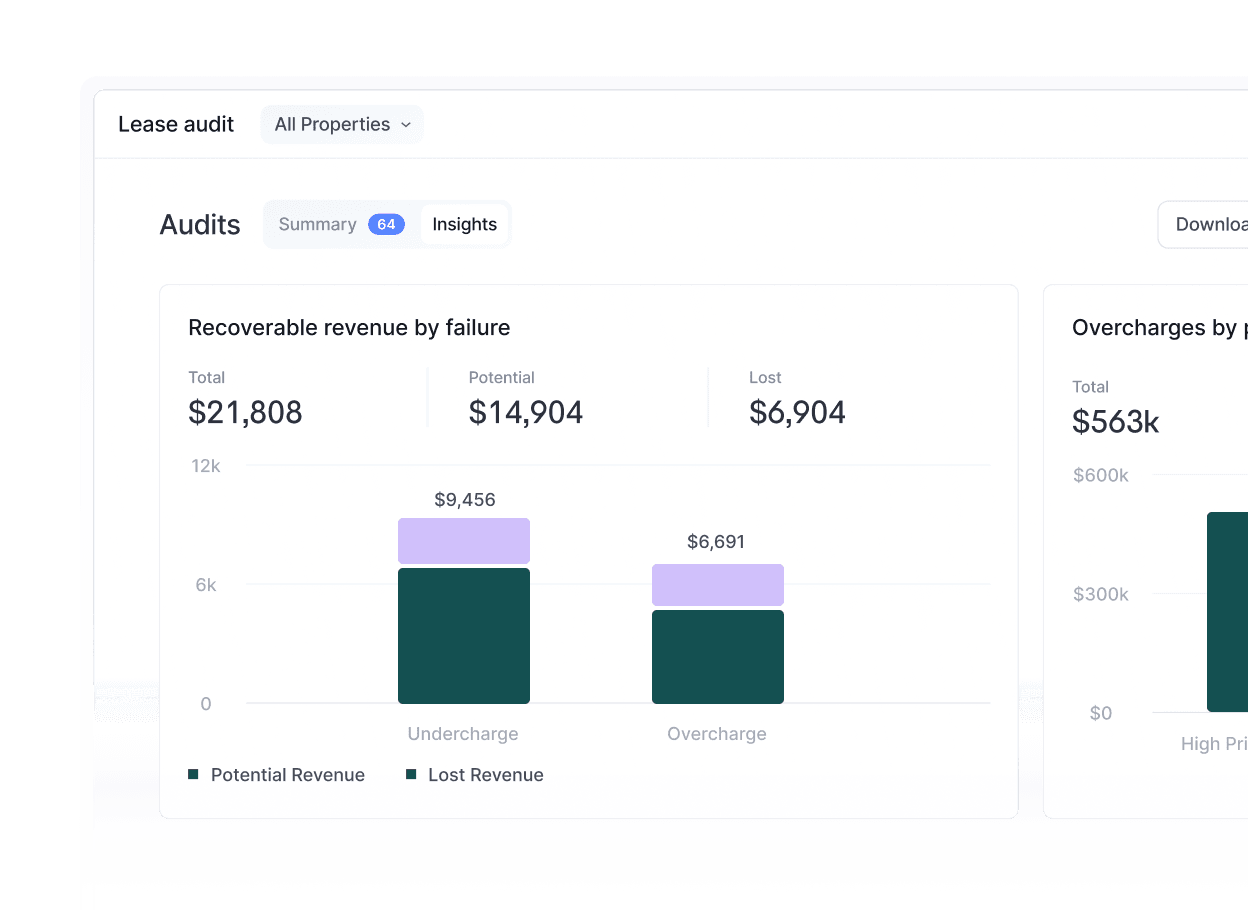
1. Lease Agreement Analysis at Scale
Lease AI reads and interprets lease agreements in bulk, extracting:
- Rent amounts and escalations
- Concessions and discounts
- Fees and additional charges
- Term lengths and renewal clauses
This lets diligence teams verify that the rent roll matches the legal lease documents. No more relying on summaries alone. Our guide to AI lease agreement analysis covers the workflow.
2. Validation of Underwriting Assumptions
During acquisitions, leasing assumptions get built into financial models before the leases are fully reviewed. That is a risk.
Lease AI lets teams:
- Validate assumptions against actual lease language
- Identify outliers or non-standard terms
- Flag leases that deviate from pro forma expectations
The payoff is fewer post-close surprises. The model rests on what the leases actually say.
3. Continuous Lease Monitoring After Close
Lease AI is not only for acquisitions. The value continues once a property is operational.
After close, AI can:
- Continuously review new and amended leases
- Detect changes that impact revenue or compliance
- Surface discrepancies early, not at the next periodic audit
This bridges the gap between due diligence and ongoing asset oversight. Our guide to AI use cases in asset management covers the broader picture.
What Lease AI Actually Catches
The findings fall into a few recurring categories. Knowing them makes the value concrete.
- Rent mismatches. The rent roll does not match the signed lease.
- Expired concessions. A discount that ended on paper still reduces rent.
- Missed escalations. A scheduled increase never reached the ledger.
- Unsupported charges. A charge with no lease behind it, or a required charge that is missing.
- Documentation gaps. A missing addendum, an unsigned lease, an absent disclosure.
Each looks small on one unit. Across a portfolio, the same error repeating points to a process gap worth fixing at the root.
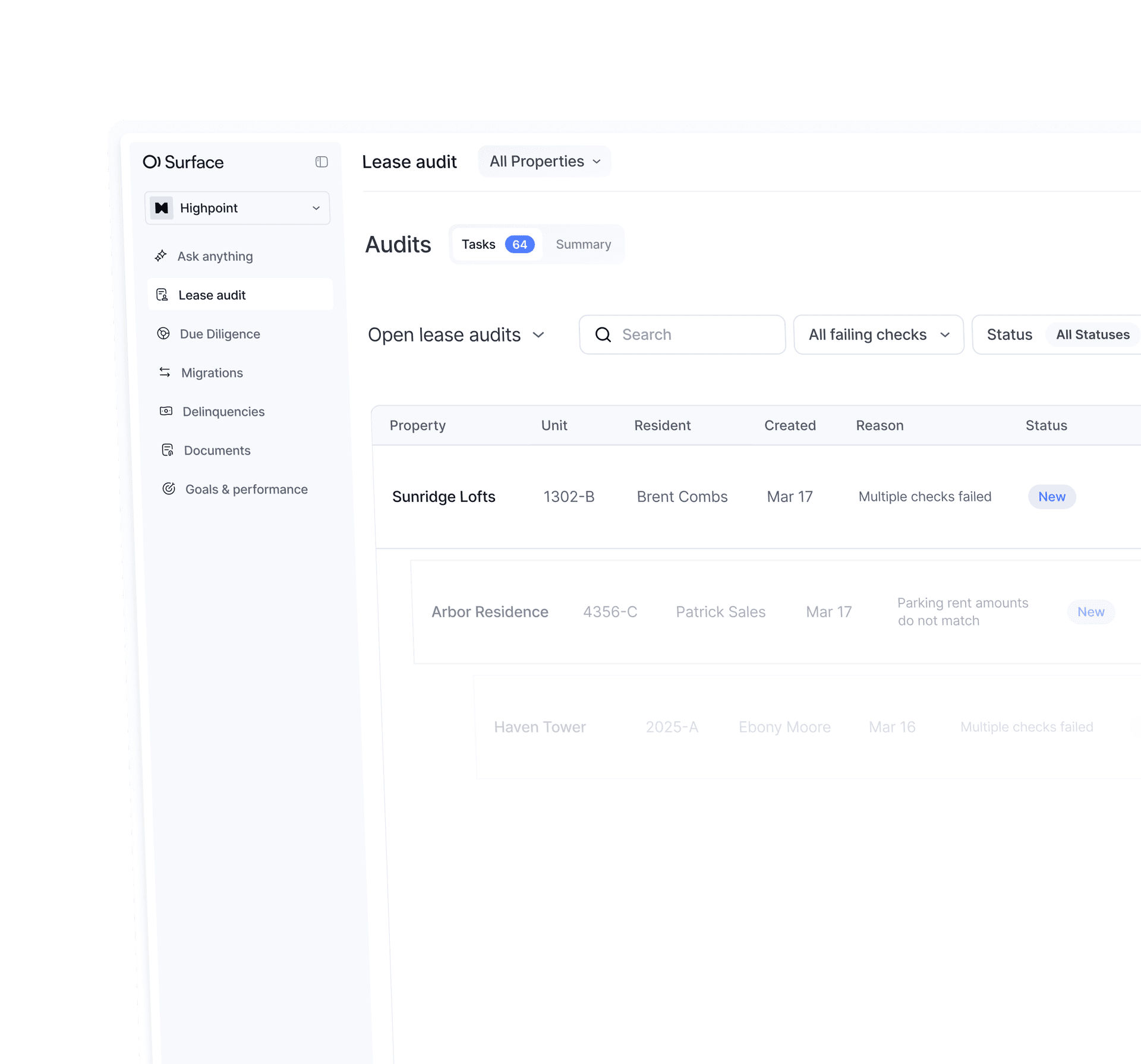
How SurfaceAI Applies Lease AI
SurfaceAI uses purpose-built AI agents to apply leasing intelligence to due diligence workflows.
Key capabilities include:
- Reading lease documents directly from source files
- Identifying discrepancies between leases and rent rolls
- Flagging missing charges or inconsistent terms
- Organizing findings in a centralized workspace
SurfaceAI is not a leasing platform or a CRM. The platform acts as an AI analysis layer that integrates with existing systems.
To see how this fits broader workflows, see our lease audit process guide and the AI real estate deal analyzer →
Accuracy, Explainability, and Trust
In due diligence, accuracy matters more than speed alone. A fast wrong answer is worse than a slow right one.
Credible lease AI systems should:
- Provide explainable outputs
- Allow human review of flagged issues
- Maintain traceability back to source documents
Lease AI should support professional judgment, not replace it. The system flags the issue. A person decides what to do.
Generative AI is particularly effective at working with unstructured information and making organizational knowledge easier to access and apply. MIT Sloan Management Review explains how GenAI can help organizations create, capture, transfer, and use knowledge across workflows rather than treating AI as a standalone technology. See MIT Sloan Management Review’s analysis of organizational knowledge and GenAI →
The Future of Lease AI
As adoption grows, leasing analysis will shift toward:
- Always-on lease verification
- Portfolio-wide lease intelligence
- AI-assisted scenario modeling during acquisitions
- Tighter integration between diligence and asset management
Lease AI becomes the connective tissue between underwriting, operations, and reporting. SurfaceAI is building toward this by applying AI agents specifically to lease analysis and due diligence, not generic automation.
Conclusion
Leasing AI is redefining how lease data gets reviewed, validated, and monitored.
By applying AI to leasing analysis, real estate teams gain:
- Higher diligence accuracy
- Faster deal execution
- Reduced post-close risk
- Continuous operational insight
SurfaceAI brings lease AI directly into due diligence workflows. The platform turns leases from static documents into actionable intelligence.
Frequently Asked Questions