
Lease Analysis Software: What It Does and Why Multifamily Teams Need It

A lease is a data-rich document. Most portfolios never fully use that data.
Rent, escalations, concessions, fees, renewal terms, and obligations all live inside each lease. But that information usually sits locked in a PDF, disconnected from the systems teams actually run on. When the lease and the ledger drift apart, revenue leaks and compliance gaps follow. Both hit the bottom line and weaken cash flow.
Lease analysis software closes that gap. It reads lease documents, extracts the terms that matter, and compares them against operational records. This guide explains what lease analysis software does and why multifamily teams need it. It also shows how the software fits into a broader multifamily management solution.
What Is Lease Analysis Software?
Lease analysis software reads and interprets lease documents at scale. Instead of a person opening each lease by hand, the software extracts the key terms and checks them against the rent roll and ledger.
The software focuses on a few core jobs:
- it extracts structured data from unstructured lease documents
- it identifies missing, inconsistent, or unusual terms
- it compares lease terms against operational records
- it flags discrepancies that affect revenue or compliance
The goal is not to replace human judgment. The software surfaces the issues, and the team decides what to do. This is the same approach behind AI lease review more broadly. That combination catches far more than manual review alone.
Why Manual Lease Review Falls Short
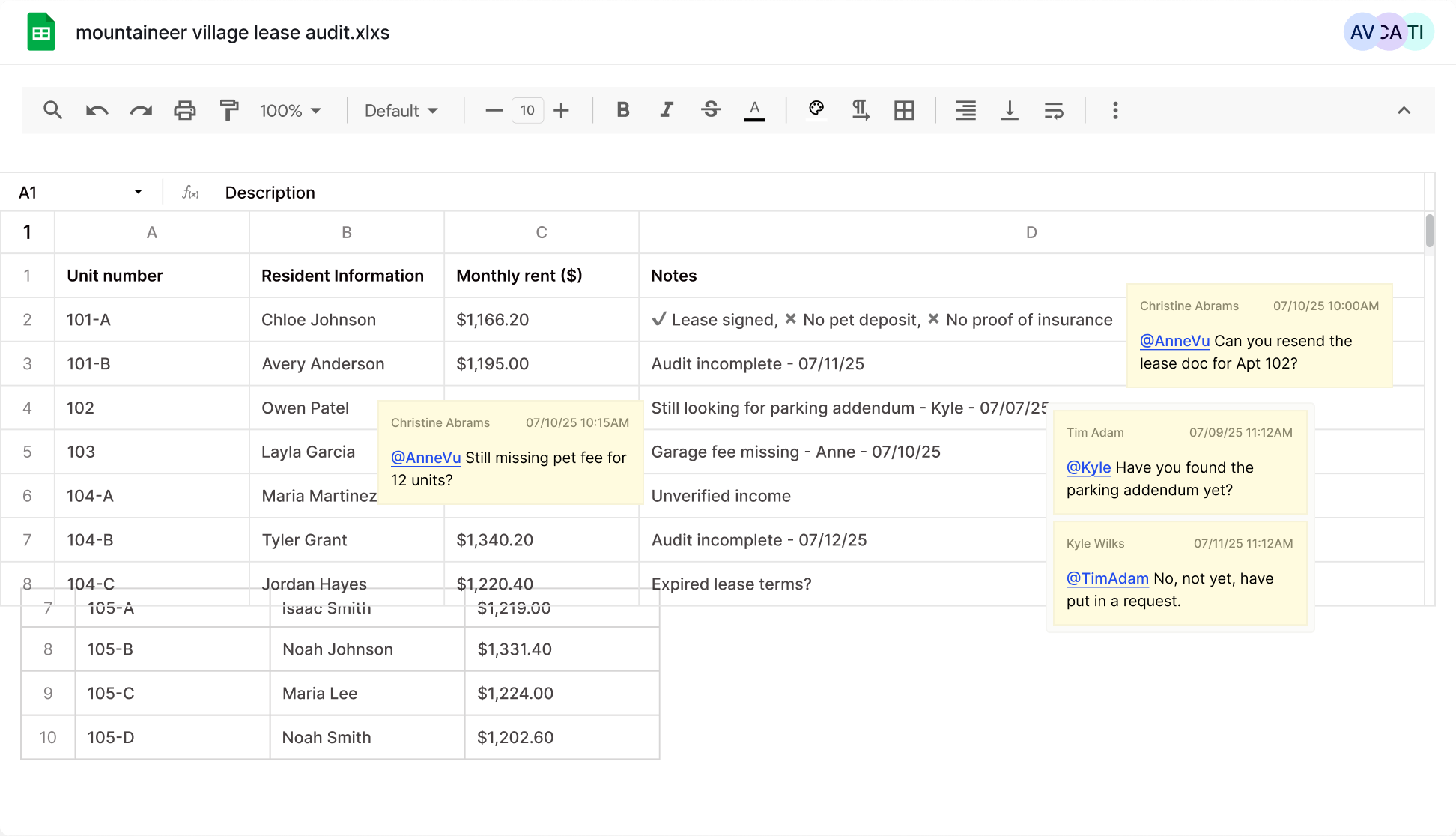
Reading leases by hand does not scale. A reviewer can work through a handful of leases carefully. Across thousands of units, that approach breaks down fast.
Manual review creates three problems. It is slow, so teams sample instead of checking every lease. It is inconsistent, because different reviewers apply different standards. And it is reactive, so errors surface during an audit or a dispute rather than before.
Lease analysis software removes those limits. It reads every lease, applies the same rules to each one, and runs continuously instead of once a quarter. For more on where manual review breaks down, see our breakdown of manual lease audit gaps. The team stops hunting for problems and starts resolving the ones the software surfaces.
What Lease Analysis Software Catches
The value shows up in what the software finds. Lease analysis software surfaces the discrepancies that quietly drain revenue and create risk.
Common examples include:
- rent that does not match the executed lease
- recurring charges written into the lease but missing from the ledger
- concessions that ran past their end date
- fees or reimbursements that were never activated
- amendments that changed terms without updating the system
Each of these looks small on one unit. Across a portfolio, they add up to real money. They distort rent payments and every financial report built on them.
A single missed charge repeated across hundreds of units becomes a serious revenue problem. Lease analysis software catches these before they compound.
Lease data quality directly affects financial accuracy. The Journal of Accountancy notes that organizations often struggle to find all lease contracts. They also struggle to keep lease data accurate and to maintain consistent controls around renewals and modifications.
It also warns that manual processes increase the risk of error as lease information becomes more complex. See the Journal of Accountancy’s analysis of lease data accuracy and control challenges
How Lease Analysis Software Fits a Multifamily Management Solution
Lease analysis software is not a standalone tool that lives off to the side. It works best as part of a broader multifamily management solution.
A modern multifamily management solution connects several layers. Multifamily property management software runs daily operations. Lease management and lease administration tools track terms and renewals.
Financial management and reporting tools track performance. And a validation layer confirms the data is actually correct. Lease analysis software powers that layer.
That validation layer matters because every other tool depends on accurate data. Reporting is only as good as the numbers behind it. If the lease says one rent and the ledger says another, the dashboard shows a number no one can trust.
Lease analysis software checks the source documents. That way, the rest of the multifamily management solution runs on data the team can rely on.
This is where lease analysis software earns its place. It does not replace the property management system. It makes the whole stack more reliable by validating the lease data underneath it.
What to Look For in Lease Analysis Software
Not every tool labeled “lease analysis” does the same thing. When you evaluate options, focus on a few criteria.
Lease-specific understanding. The software should recognize lease structure directly. It should know base rent, escalations, concessions, and lease renewal terms, not just read text.
It should handle the property types you actually operate. That depth is what makes the analysis reliable.
Validation against operational data. Strong software does not stop at reading the lease. It compares lease terms against the rent roll and ledger to surface discrepancies. Reading alone is not enough.
Full-portfolio coverage. The software should analyze every lease, not a sample. Leaks hide in the units no one reviews, so coverage is the whole point.
Clean integration. The software should connect to the property management system and fit into how the team already works. A tool that requires parallel data entry rarely gets used.
Clear output. The software should surface prioritized findings, not a flat report. The team needs to know what matters most first.
Where SurfaceAI Fits
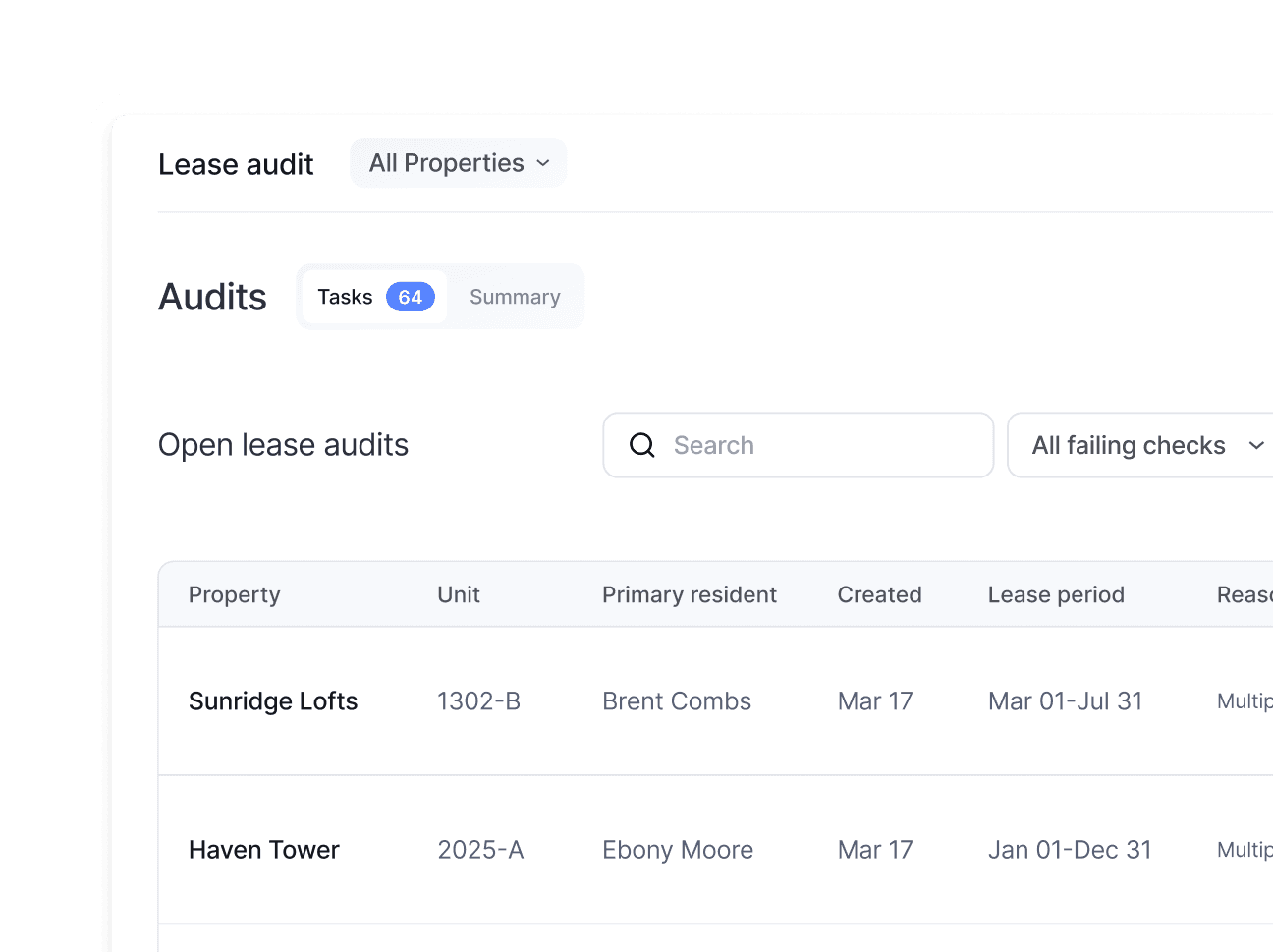
SurfaceAI is lease analysis software purpose built for multifamily operators and property owners. It reads executed leases and compares their terms against the rent roll and ledger. Then it surfaces the discrepancies that affect revenue and compliance.
SurfaceAI does not replace the property management system. It validates the data those systems hold. Its Lease Audit Agent analyzes every lease across the portfolio and applies consistent rules and flags the exceptions that need attention. That gives operators confidence in the numbers behind every decision, from monthly reviews to long term strategy.
For multifamily teams, that reliability is the point. A multifamily management solution only works when the underlying data is accurate. SurfaceAI makes sure it is.
Conclusion
A lease holds more data than most portfolios ever use. Lease analysis software unlocks that data. It reads every lease, checks it against operational records, and surfaces the discrepancies that drain revenue and create risk.
Manual review cannot keep pace at scale. Lease analysis software can. It also works as part of a broader multifamily management solution. There, it gives every other tool something to rely on: lease data the team can trust.
Do you want to analyze every lease and catch the discrepancies manual review misses? Book a demo to see how SurfaceAI works.
Frequently Asked Questions About Lease Analysis Software