
AI Lease Agreements: How AI Transforms Lease Review in Due Diligence

The Role of Lease Agreements in Due Diligence
Lease agreements sit at the core of real estate value.
They define revenue, obligations, concessions, escalations, and risk, but they are also one of the most manual parts of diligence.
During acquisitions or portfolio reviews, teams often need to analyze:
- Hundreds or thousands of leases
- Multiple versions and amendments
- Inconsistent formatting and language
- Embedded financial and legal clauses
Manual review creates bottlenecks, increases error risk, and limits how deeply teams can actually review every document.
This is where AI lease agreement analysis becomes essential.
What Is an AI Lease Agreement System?
An AI lease agreement system uses machine learning and document intelligence to read, interpret, and analyze lease documents at scale.
Rather than drafting leases, AI in this context focuses on:
- Extracting structured data from unstructured lease documents
- Identifying missing, inconsistent, or unusual terms
- Comparing lease language against expected standards
- Supporting diligence teams with prioritized issue detection
This distinction matters: AI is not replacing legal review, it is accelerating and strengthening it.
How AI Reads Lease Documents
Lease documents are complex. They include legal language, tables, addendums, and exceptions that don’t follow a standard template.
Modern lease document AI systems can:
- Ingest PDFs, scans, and digital files
- Detect clauses related to rent, fees, escalations, and concessions
- Flag inconsistencies across similar leases
- Surface outliers that deserve human review
Academic research confirms that AI excels at structured extraction from legal documents when paired with human oversight. (Reference: Stanford Report →).
AI Lease Agreements in Due Diligence Workflows
In diligence, speed and accuracy directly impact outcomes. AI supports this by enabling:
Faster Lease Review
AI processes large lease sets in hours instead of weeks, allowing diligence teams to move faster without sacrificing coverage.
Broader Coverage
Instead of sampling, AI enables review across all leases, reducing blind spots.
Early Risk Detection
AI can surface:
- Missing or inconsistent clauses
- Non-standard concessions
- Unusual escalation terms
- Documentation gaps
This allows teams to focus legal and financial review where it matters most.
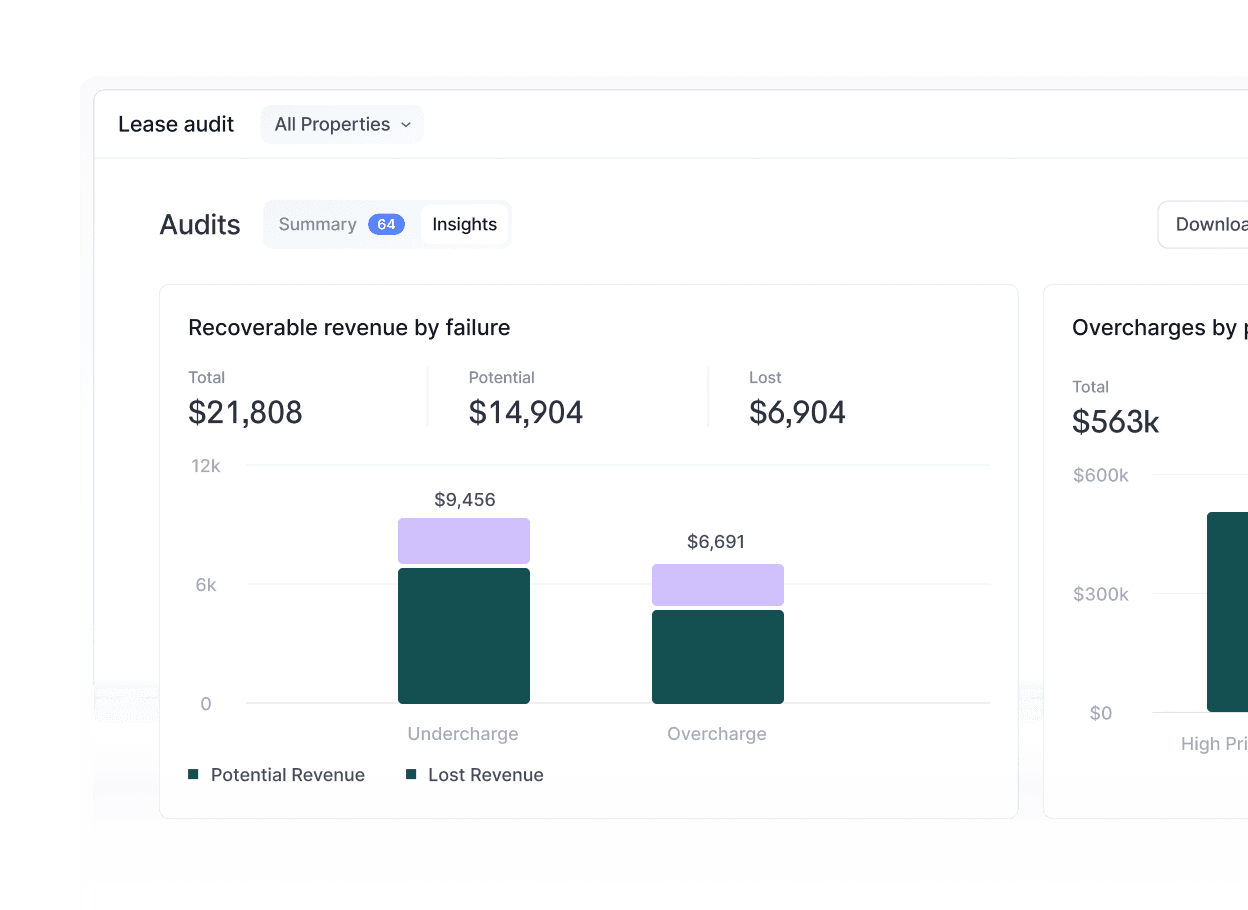
How SurfaceAI Applies AI to Lease Agreements
SurfaceAI is not a lease drafting tool and not a contract generator. It applies AI to existing lease agreements through purpose-built agents designed for due diligence and ongoing oversight.
Key Capabilities
Due Diligence Agent
- Reviews large volumes of lease agreements during acquisitions
- Flags inconsistencies and potential risks
- Helps teams validate assumptions before close
Lease Audit Agent
- Runs continuously post-acquisition
- Compares lease terms against expected rules
- Surfaces discrepancies that impact revenue or compliance
Our guide to why lease audits miss revenue leaks covers the gaps this catches.
Document Management Agent
- Organizes lease documents across systems
- Ensures teams can quickly access and reference source files
- Reduces document chaos during diligence
Transitions Agent
- Designed to support ownership and management handovers, when lease agreements and resident records move between systems
- Aims to keep lease documents and their data intact and correctly matched during the transition
- Helps teams start from complete, validated lease information rather than reconstructing it after a takeover
All findings are surfaced through the *SurfaceAI Workspace*, where teams can review, prioritize, and act.
Learn more about how this fits into broader workflows in AI Real Estate Deal Analyzer and AI Use Cases in Asset Management →

“Surface lets us audit entire communities instead of the sample we used to settle for, with immediate visibility from one dashboard. It's already uncovered uncharged pet rent, parking fees, and under-billed rent. They're easy to work with and quick to deliver. I'd tell anyone considering it to do it.”
Andy Jones
Why AI Lease Agreement Analysis Matters
Without AI, lease diligence often becomes:
• Time-boxed instead of thorough
• Sample-based instead of comprehensive
• Reactive instead of proactive
With AI:
• Issues are surfaced earlier
• Review scales with portfolio size
• Human expertise is applied more effectively
This aligns with broader guidance from standards bodies emphasizing AI as an augmentation layer, not a replacement, for professional judgment.
Industry standards such as the NIST Artificial Intelligence Risk Management Framework outline best practices for deploying AI systems responsibly in high-stakes environments like contract analysis and compliance.
AI Lease Agreements vs. Generic AI Tools
General-purpose AI tools may summarize text, but they:
• Are not trained on lease structures
• Do not integrate with diligence workflows
• Do not maintain traceability to source documents
SurfaceAI’s approach is different:
AI agents are applied directly to real operational data and designed to support real estate diligence at scale.
AI Lease Review Software: What to Look For
Teams evaluating AI lease review software for acquisitions or ongoing oversight should focus on a few criteria that separate genuine diligence tools from general document readers.
Lease-specific understanding. The software should recognize lease structure directly: base rent, escalations, concessions, renewal options, and addenda. Automated lease analysis is only reliable when the system understands what it is reading, not just that text exists.
Validation against operational data. Strong AI lease review software does not stop at reading the lease. It compares lease terms against the rent roll and operational records to surface discrepancies that affect revenue and underwriting.
Full-population coverage. The value of automated lease analysis at scale is reviewing every lease, not a sample. Look for software that screens the entire portfolio and surfaces exceptions, rather than tools that only speed up manual sampling.
Workflow fit. The software should fit how diligence teams already work, surfacing prioritized findings into a shared workspace rather than producing another report to reconcile.
Traceability. Every finding should trace back to the source lease. When a lender or investment committee questions a number during lease due diligence, that audit trail is what makes the finding defensible.
The difference between AI lease review software and a general summarization tool is not speed. It is whether the output can be trusted and defended when real capital depends on it. For how these tools compare to lease management systems, see our guide to lease audit vs lease management software →
The Future of Lease Agreements in Due Diligence
As portfolios grow and timelines compress, diligence will continue to shift toward:
• Continuous validation instead of one-time review
• Full-portfolio coverage instead of sampling
• AI-assisted prioritization instead of manual sorting
AI lease agreement analysis is becoming foundational, not experimental.
SurfaceAI is building toward this future with agent-based automation that fits directly into how diligence teams already operate.
Conclusion
AI is transforming how lease agreements are reviewed during due diligence, not by replacing professionals, but by giving them better visibility, coverage, and speed.
SurfaceAI applies AI where it matters most:
analyzing real lease documents, surfacing real issues, and supporting better decisions.
If you want diligence that scales with your portfolio, AI-driven lease agreement analysis is no longer optional.
Book a Demo today to learn more →
Frequently Asked Questions About AI Lease Agreements