
Multifamily Investing: A Complete Guide to Multifamily Real Estate Investment

Multifamily investing is now one of the most popular real estate investment strategies. Investors like the combination of cash flow, appreciation, and portfolio scale.
Unlike single family rentals, multifamily properties generate income from multiple units within a single asset.
That creates opportunities for:
- stronger economies of scale
- more predictable cash flow
- operational efficiencies
- institutional-quality investments
- portfolio growth
- long-term wealth creation
Successful multifamily investing requires more than buying apartment buildings.
The best investors do four things well. They evaluate markets, analyze properties, manage operational risk, and execute a long-term investment strategy.
This guide explains how multifamily real estate investing works, how investors evaluate opportunities, and what separates successful multifamily investments from underperforming ones.
What Is Multifamily Investing?
Multifamily investing means purchasing and operating residential properties that contain multiple rental units.
Examples include:
- duplexes
- triplexes
- fourplexes
- garden-style apartment communities
- mid-rise apartment buildings
- high-rise multifamily properties
- student housing communities
- workforce housing assets
- mixed-use residential communities
The objective is typically to generate returns through:
- rental income
- NOI growth
- appreciation
- refinancing
- operational improvements
- eventual disposition
Multifamily real estate investment has become increasingly attractive. It combines recurring income with the ability to create value through active management. That makes multifamily different from most commercial real estate categories. In those categories, value creation usually depends on longer lease structures and tenant credit.
Multifamily continues to attract substantial capital. According to Fannie Mae’s Q1 2026 Multifamily Earnings Highlights, new multifamily business volume reached $17.1 billion in the first quarter of 2026. That was its strongest first-quarter volume in five years.
Why Investors Choose Multifamily Real Estate Investing
Several reasons draw investors to multifamily housing investment opportunities.
Multiple Income Streams
One vacancy does not eliminate all income. Multifamily properties generate revenue from multiple units at once. That reduces income volatility compared to single family homes. In a single-family rental, one vacancy can wipe out all rental income for the property.
Operational Scale
Many operating expenses can be spread across a larger number of units.
Examples include:
- maintenance
- staffing
- landscaping
- insurance
- technology
- management
Scale helps investors reduce operating costs on a per-unit basis and improve operational efficiency.
Professional Management
Larger multifamily assets can support dedicated property managers, creating more structured operations.
Value Creation Opportunities
Investors can improve performance through:
- renovations
- operational efficiencies
- lease optimization
- expense reductions
- revenue recovery
- improved resident retention
This gives real estate investors more control over asset performance compared to passive investment property options.
Types of Multifamily Investment Strategies
Not all multifamily investments follow the same strategy. Investors typically choose from four common approaches, each with different risk and return profiles.
Core
Core investments focus on:
- stabilized assets
- strong locations
- predictable cash flow
- lower risk profiles
Investors prioritize stability over aggressive upside.
Core-Plus
Core-plus investments seek stabilized assets with moderate operational improvements and incremental NOI growth. These investment opportunities typically carry slightly higher risk and return potential.
Value-Add
Value-add multifamily investing focuses on improving performance.
Examples include:
- unit renovations
- operational improvements
- rent optimization
- occupancy growth
- revenue enhancement
Many multifamily investment firms focus heavily on value-add strategies. For the firm and fund structure behind these strategies, see our guide to multifamily funds →
Opportunistic
Opportunistic strategies involve distressed assets, major repositioning, redevelopment, or significant operational turnarounds. These investments typically carry higher risk and higher potential returns.
How to Evaluate Multifamily Investment Opportunities
A multifamily investment should be evaluated through several lenses.
Strong investments usually combine market strength, operational quality, financial performance, manageable risk, and execution potential.
Step 1: Evaluate the Market
Investors should evaluate the market before analyzing the property itself.
Important factors include:
- population growth
- job growth
- household formation
- affordability
- supply pipeline
- occupancy levels
- rent growth trends
A strong property in a weak market can still struggle. Market fundamentals matter.
Step 2: Review Property Performance
Investors should evaluate:
- occupancy
- rent roll quality
- resident turnover
- concessions
- delinquency
- operating expenses
- maintenance trends
- historical NOI (net operating income)
This provides a picture of current asset performance.
Step 3: Conduct Property Investment Analysis
The best property investment analysis goes beyond headline numbers.
Investors should review:
- rent rolls
- lease files
- resident records
- expense history
- capital expenditures
- market comparables
- financing assumptions, including interest rates and purchase price sensitivity
- capitalization rate assumptions
The objective is to understand whether the reported performance reflects reality.
For a deeper framework, see Real Estate Investment Property Analysis →
Step 4: Analyze the Business Plan
Investors should ask:
- What is the value creation strategy?
- How realistic are rent growth assumptions?
- What operational changes are required?
- What capital improvements are planned?
- What risks could delay execution?
The best multifamily investments usually have a clear and achievable business plan.
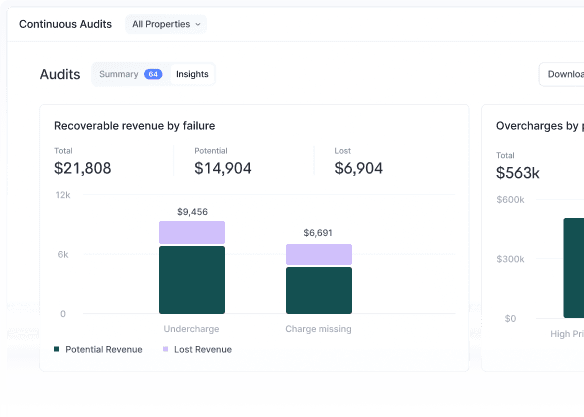
Why Multifamily Property Analytics Matter
Multifamily property analytics have become increasingly important as portfolios grow.
Investors need visibility into:
- occupancy trends
- rent growth
- concessions
- lease expirations
- delinquency
- operating expenses
- compliance issues
- revenue performance
The challenge is that this information often lives across multiple systems.
Analytics help investors understand not only what happened, but why it happened. This is especially valuable for asset managers overseeing multiple properties or markets.
Common Risks in Multifamily Real Estate Investment
Every multifamily investment carries risk.
The most common risks include:
Market risk. Economic conditions, supply growth, and local demand can affect performance.
Operational risk. Poor property management can reduce NOI and resident satisfaction.
Financial risk. Interest rates, refinancing conditions, and leverage affect returns.
Lease risk. Inaccurate lease records, billing issues, and document gaps can affect revenue.
Compliance risk. Missing documentation and regulatory issues can create operational exposure.
Execution risk. Value-add strategies depend on successful implementation. The more aggressive the business plan, the higher the execution risk.
Financing conditions and interest rate movements remain important drivers of multifamily investment performance. Freddie Mac notes that borrowing costs, capitalization rates, and refinancing conditions continue to influence multifamily investment activity and returns across the market. See Freddie Mac’s Multifamily Outlook →
The Hidden Risks Investors Often Miss
Many underwriting models focus on rents, occupancy, expenses, and cap rates.
But some of the most expensive risks live inside the operating data.
Examples include:
- lease terms that do not match the rent roll
- undocumented concessions
- missing recurring charges
- incomplete resident files
- missing addenda
- compliance gaps
- takeover document issues
These problems may not appear in summary reports. But they can materially affect revenue and asset performance.
For acquisition workflows, see Multifamily Takeover Documents Guide for 2026 →
How Technology Is Changing Multifamily Investing
Modern multifamily real estate investing increasingly relies on technology.
Investors use software to support:
- market analysis
- underwriting
- due diligence
- reporting
- asset management
- property operations
Technology helps investors evaluate more opportunities while improving consistency and visibility.
But software alone is not enough. The quality of the underlying data still matters. For a deeper look at technology in this space, see our guide to AI tools for property investment analysis →

Where SurfaceAI Fits in Multifamily Investing
SurfaceAI supports multifamily investors by helping validate the operational data behind investment decisions.
We are not an investment marketplace or underwriting platform. SurfaceAI helps investors, acquisitions teams, and asset managers analyze lease, rent roll, and document-level information. That data often affects investment outcomes.
SurfaceAI helps teams:
- compare lease documents against rent rolls and PMS records
- identify revenue-impacting discrepancies
- detect missing lease documents
- surface compliance issues
- support acquisition due diligence
- improve confidence in multifamily property analytics
- connect operating data to investment decisions
This matters most during acquisitions where manual review becomes difficult to scale across hundreds or thousands of units.
For related workflows, see the SurfaceAI Due Diligence Agent and Lease Audit Agent →
What Successful Multifamily Investors Focus On
The strongest multifamily investors focus on several areas consistently.
Data quality. Good decisions require accurate information.
Disciplined underwriting. They challenge assumptions instead of accepting them at face value.
Operational excellence. Property performance drives investment performance.
Risk management. They identify issues before they become expensive problems.
Long-term execution. They understand that acquisitions create opportunities. But operations create results.
Multifamily Investing Checklist
Before investing in multifamily properties, review:
- market fundamentals
- rent roll quality
- lease file completeness
- operating expenses
- occupancy trends
- concessions
- resident turnover
- capital needs
- financing assumptions
- compliance records
- property condition and property type suitability for the strategy
- number of units and unit mix
- business plan feasibility
- asset management requirements
- operational risks
This creates a more complete picture of investment quality.
Key Takeaway
Multifamily investing remains one of the most attractive real estate investment strategies. It combines recurring income, operational scale, and long-term value creation.
But successful multifamily real estate investing requires more than finding attractive properties. Investors need strong market analysis, disciplined underwriting, operational visibility, and confidence in the data supporting investment decisions.
Conclusion
Multifamily real estate investment offers significant opportunities for investors who can combine strong acquisition discipline with effective asset management and operational execution.
The best investors look beyond headline financials. They focus on the lease data, operational processes, document quality, and risk factors that ultimately drive asset performance.
If your team is evaluating multifamily investments and wants stronger visibility into lease accuracy, rent roll quality, and acquisition risk, book a demo. SurfaceAI helps investors make more confident multifamily investment decisions.
Frequently Asked Questions About Multifamily Investing