Real Estate Investment Property Analysis: How to Evaluate Rental Property

Real estate investment property analysis is the process of determining whether a rental property is financially, operationally, and strategically worth pursuing.
The goal is not just to decide whether a property looks attractive. It is to understand whether the numbers, risks, assumptions, and operating data support the investment thesis.
A strong property analysis should answer:
- Does the deal make financial sense?
- Are the rent assumptions realistic?
- Are expenses accurate?
- What risks could affect NOI?
- What does the lease and tenant data actually support?
- How sensitive is the investment to changes in rent, occupancy, expenses, or financing?
This guide breaks down how to evaluate rental property through a practical real estate investment analysis framework.
For broader investment workflow context, see real estate investment analysis tools →

Start With the Investment Strategy
Before reviewing the numbers, investors need to define the strategy. A property can look attractive in one strategy and weak in another.
Common strategies include:
- stabilized income
- value-add repositioning
- long-term hold
- renovation-led upside
- redevelopment
The strategy determines how the deal should be evaluated. A stabilized asset should be judged on current income durability, expense accuracy, and tenant reliability. A value-add multifamily acquisition may require deeper review of rent growth potential, renovation assumptions, and operating inefficiencies.
Real estate analysis should always begin with the investment thesis.
Review the Property’s Current Income
The first major part of rental property financial analysis is income review.
Investors should evaluate:
- current gross rental income
- occupied units
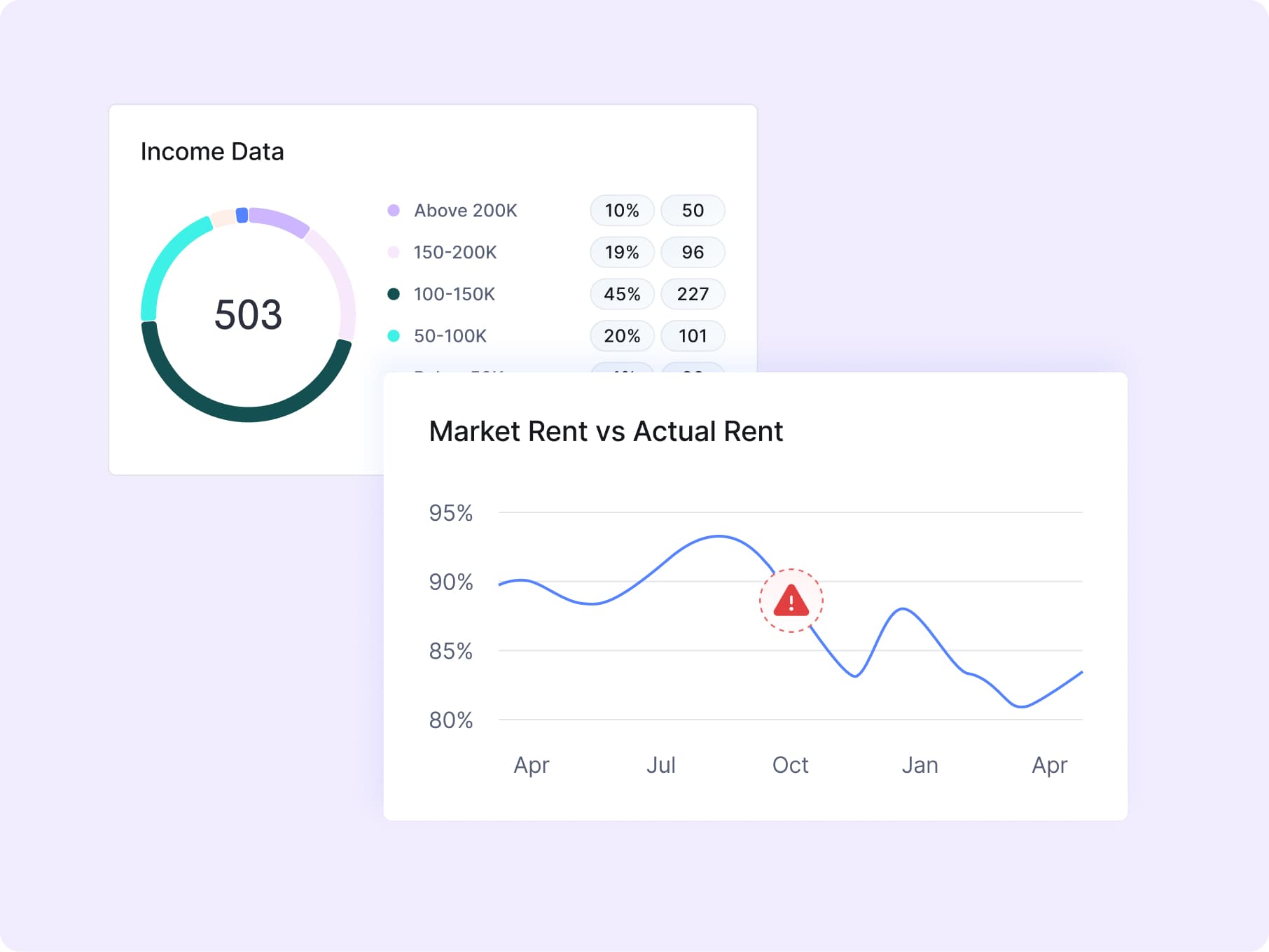
- market rent assumptions
- loss to lease
- vacancy rate
- concessions
- recurring fees
- delinquency exposure
The key question is simple: is the income shown in the model actually supported by the property records?
In multifamily, this requires more than looking at the rent roll. Investors should compare rent roll data against lease documents, renewal agreements, concession addenda, resident ledgers, and PMS data.
This is where many underwriting errors begin. A deal model may assume a certain monthly rent level. But lease files may show concessions, missing charges, or billing inconsistencies. These reduce actual income below what the model projects.
For related workflows, see rent roll to lease reconciliation for multifamily M&A →
Analyze Operating Expenses
Income only tells part of the story. A strong property investment analysis also needs a detailed review of operating expenses.
Common expense categories include:
- payroll
- repairs and maintenance
- utilities
- insurance
- property taxes
- management fees
- turnover costs
- compliance-related costs
Investors should compare historical expenses against trailing financials, budgeted expenses, market benchmarks, expected tax reassessment, and insurance changes.
The goal is to determine whether expenses are repeatable, understated, overstated, or likely to change after acquisition.
One common mistake real estate investor teams make is focusing too heavily on revenue upside while underestimating expense volatility.
Insurance costs have become one of the fastest-growing expense categories in multifamily. Properties in high hurricane-risk metros are seeing significantly higher premiums as a share of gross revenue. According to Moody’s Analytics, general inflation, social inflation, litigation trends, and more frequent natural catastrophes are all driving insurance premiums higher across CRE. That makes expense benchmarking a critical step in any rental property financial analysis.
Calculate Net Operating Income
Net operating income is one of the most important outputs of real estate investment analysis.
NOI is generally calculated as gross operating income minus operating expenses. It drives valuation, debt sizing, cash flow, return projections, refinance potential, and exit assumptions.
But NOI is only as reliable as the data behind it. If rental income is overstated, concessions are missed, or expenses are understated, the net operating income calculation becomes unreliable.
For investors, the question is not only “What is the NOI?” The better question is: how confident are we that this NOI is accurate?
Evaluate Rent Roll Quality
Rent roll quality is central to real estate investment property analysis, especially in multifamily.
A rent roll should be tested for:
- current rent accuracy
- lease expiration dates
- occupancy status
- concessions
- deposit records
- delinquency
- recurring charges
- renewal terms
A clean rent roll supports better underwriting. A weak rent roll creates risk.
Common rent roll issues include rent amounts that do not match the lease. Expired concessions may remain active. Fees may be missing from billing records.
Renewal dates may conflict with lease files. These issues can affect projected cash flow and post-close operations.
Review Lease and Tenant Data
A tenant lease audit is not just an operational task. It is part of investment property analysis.
Lease and tenant records help investors confirm whether the property’s income is enforceable and accurately reflected in operating systems.
Investors should review:
- lease start and end dates
- base rent
- concessions
- recurring fees
- utility terms
- parking or storage agreements
- renewal terms
- missing addenda
Underwriting often depends on assumptions that come directly from lease data. If the lease data is wrong, the underwriting may be wrong.
For lease review context, see how to prioritize lease due diligence findings fast →
Assess Market Position
Property analysis should also include market review.
Investors should evaluate:
- submarket performance
- rent growth trends
- competitive properties
- supply pipeline
- employment drivers
- population growth
- affordability
- local regulation
Market analysis helps answer whether projected rent growth and occupancy assumptions are realistic given current market conditions. The goal is not to force the market to support the model. The goal is to test whether the model reflects the market.
Supply is moderating across multifamily. After construction peaked at a 40-year high in 2024 with more than 700,000 apartments delivered, completions dropped roughly 20% in 2025. The pipeline is projected to continue declining in 2026.
According to CoStar, moderating supply combined with steady renter demand should support incremental rent increases. But regional performance varies widely. Midwest and Northeast markets are outperforming while Sun Belt metros continue working through oversupply.
Build the Deal Analysis and Test the Assumptions
Investors should evaluate both current and projected performance.
Core metrics may include:
- purchase price
- cap rate
- NOI
- cash on cash return
- internal rate of return (IRR)
- equity multiple
- debt service coverage ratio
- break-even occupancy
- hold period
- exit cap rate
- closing costs and mortgage payment
These metrics should be tested across multiple scenarios. A single base case is not enough. Investors should model multiple scenarios. These include a base case, downside case, higher expense case, higher interest rate case, and lower exit valuation case.
Every analysis depends on assumptions. These include rent growth, vacancy, bad debt, and expense growth. Property tax increases, insurance increases, renovation costs, and exit cap rate round out the picture. Investors should ask what happens if rent growth is lower, if expenses increase faster, or if exit pricing is weaker.
Strong property investment analysis does not only show upside. It shows what could break the deal.
Identify Operational Risks
Many investment risks are not visible in the headline financials.
Operational risks may include:
- incomplete lease files
- manual billing errors
- recurring revenue leakage
- poor document management
- compliance gaps
- inconsistent PMS data
- high turnover costs
These risks matter because they can reduce NOI after closing. For investors, the asset’s operational condition is part of the investment thesis. A property with strong market upside but poor operational controls may require more time and cost than expected. It may also demand more management attention.

Where SurfaceAI Fits in Investment Property Analysis
SurfaceAI supports investment property analysis by helping multifamily investors validate the operating data behind the deal.
SurfaceAI is not a generic spreadsheet model or market data platform. t helps acquisitions and asset management teams analyze lease, rent roll, and document-level information. This is the data that can affect underwriting confidence.
SurfaceAI helps teams:
- compare lease documents against rent rolls and PMS records
- identify rent, fee, concession, and renewal discrepancies
- detect potential revenue leakage
- surface missing lease documents
- connect diligence findings back to underwriting assumptions
This is especially valuable when investors need to verify one key question. Does the property’s reported income match the underlying lease and tenant records?
For related acquisition workflows, see the SurfaceAI Due Diligence Agent. Also, see our guide to AI tools for property investment analysis →
Connect Property Analysis to Post-Close Execution
A common mistake is treating investment analysis as something that ends at closing. In reality, the analysis should shape the post-close operating plan.
Teams should convert findings into action items. These include correcting billing discrepancies, updating PMS records, and organizing missing documents. Resolving compliance gaps and tracking revenue recovery opportunities complete the list.
This is especially important in multifamily acquisitions, where post-close execution determines whether the investment thesis becomes reality. Structured takeover document workflows give operations and asset management teams a cleaner path after takeover.
Common Mistakes in Real Estate Investment Property Analysis
Relying only on seller-provided data. Rent rolls, lease files, ledgers, and operating data should be reviewed together.
Ignoring lease-level details. Small lease discrepancies can become material across a large portfolio.
Overestimating rent growth. Assumptions should be tested against market demand and affordability.
Underestimating expenses. Insurance, taxes, payroll, maintenance, and utilities can materially change projected returns.
Treating the model as the decision. A model supports the decision. It is not the decision itself.
Separating underwriting from operations. The strongest investment teams connect analysis, diligence, and post-close execution.
Key Takeaway
Real estate investment property analysis is not just about calculating returns. It is about validating whether the asset can actually support those returns.
Investors need to analyze income, expenses, lease records, market assumptions, operational risk, and sensitivity scenarios before making a decision. The strongest investment analysis connects the financial model to the underlying operating data.
Conclusion
A strong real estate investment analysis process helps investors move beyond headline numbers. It helps them understand the real quality of a rental property.
That means reviewing the rent roll and testing income. It means analyzing expenses and validating lease records. It means identifying operational risks and connecting findings back to the deal model.
Book a demo to see how SurfaceAI supports more confident investment property analysis. See how it improves visibility into lease accuracy, rent roll quality, and operating risk.
Frequently Asked Questions About Property Analysis