
Best AI Tools for Real Estate Investors: How AI Improves Analysis, Diligence, and Decision-Making

Real estate investors work under data density and time pressure. Every acquisition depends on reading leases, financial assumptions, operating statements, and legal obligations correctly.
As deal velocity rises, manual analysis gets harder to scale. AI tools help investors process large volumes of information consistently. They reduce blind spots and improve confidence.
This guide breaks down the best AI tools for real estate investors by workflow. Each section covers what the category does, where AI adds value, and how to choose tools that fit.
(Reference: OECD – Artificial intelligence in finance →)
Why Real Estate Investors Are Turning to AI Tools
The volume of data behind a single deal is the core problem.
A mid-sized acquisition can involve:
- Thousands of lease pages
- Multiple years of financials
- Rent rolls and operating statements
- Legal and compliance documents
No team can read all of it by hand inside a diligence window. So investors sample, and sampling misses the errors that change a deal.
AI tools for real estate investors close that gap. They read the full set, not a slice. They apply the same checks every time and surface what matters for a human to judge.
What “Best AI Tools” Means for Real Estate Investors
There is no single AI product that covers every investor workflow. The best AI tools for real estate investing align with specific stages of the investment lifecycle.
For real estate investors, AI tools typically support:
- Deal analysis and underwriting validation
- Due diligence and document review
- Lease intelligence and compliance
- Portfolio-level monitoring
Evaluating AI tools by workflow is more useful than ranking them by feature count. A long feature list means little if the tool does not fit how investors actually work.
AI Tools for Real Estate Investment Analysis
Investment analysis is where most deals are won or lost. The numbers have to be right before anything built on them means anything.
AI supports investment analysis in a few ways:
- Comparing rent assumptions against executed leases
- Identifying unusual expense structures
- Highlighting outliers across a portfolio
- Flagging gaps between the rent roll and the underwriting model
The value is accuracy, not speed alone. An underwriting model built on an unverified rent roll inherits every error in it. AI checks the inputs before the model runs. Our guide to real estate investment analysis covers the methodology in depth.
AI Tools for Due Diligence
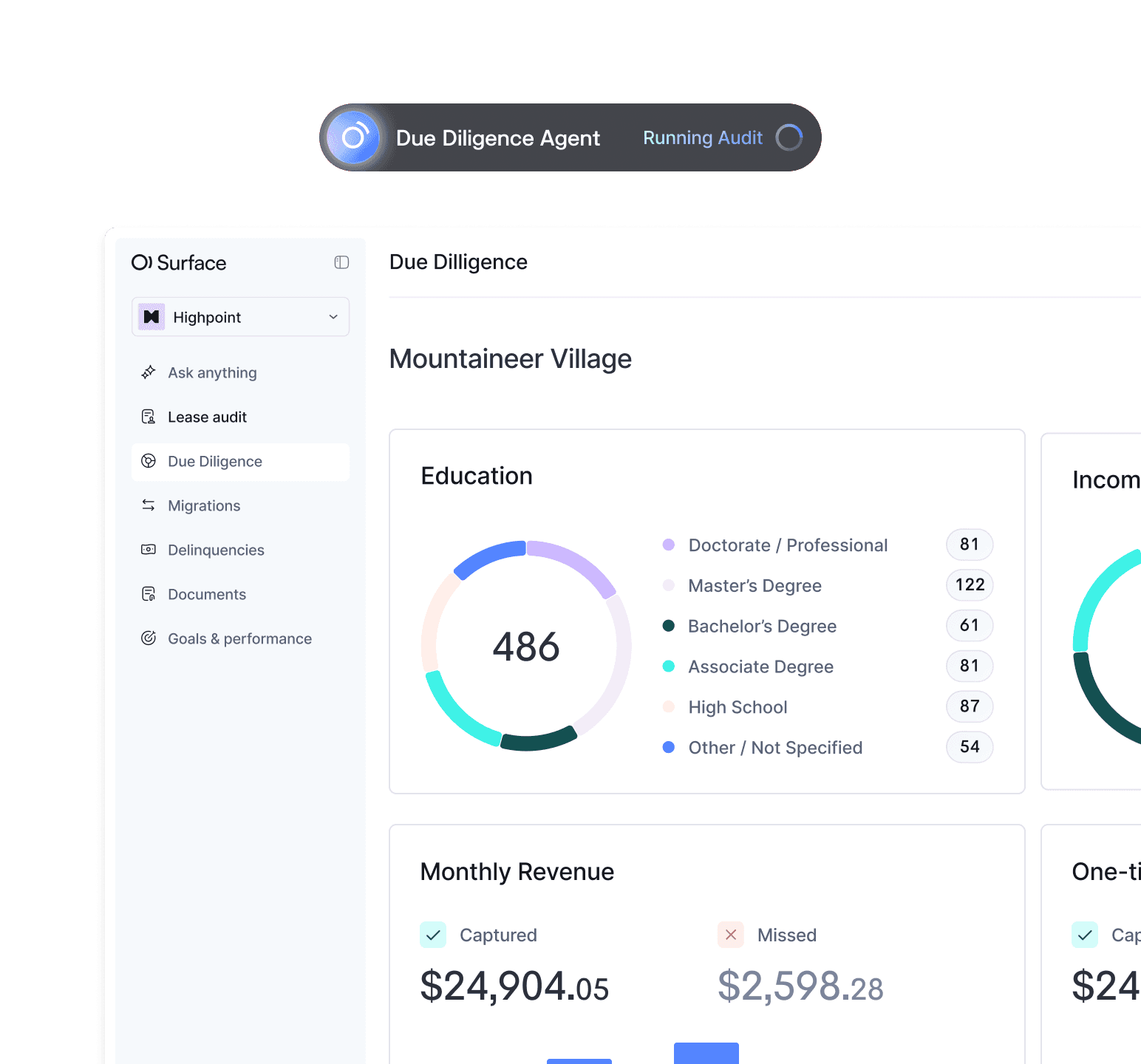
Due diligence is one of the highest-impact uses of AI for real estate investors. The diligence window is short, and the documents are many.
AI-driven diligence tools let investors:
- Review all lease documents instead of a sample
- Identify inconsistencies between leases and rent rolls
- Surface missing charges or non-standard terms
- Reduce post-close risk
The shift from sampling to full coverage is the point. A systematic error can affect hundreds of units while never appearing in the handful a reviewer opened. Full-population review catches what sampling misses. Our guide to AI due diligence for real estate covers the process.
AI Tools for Lease Intelligence
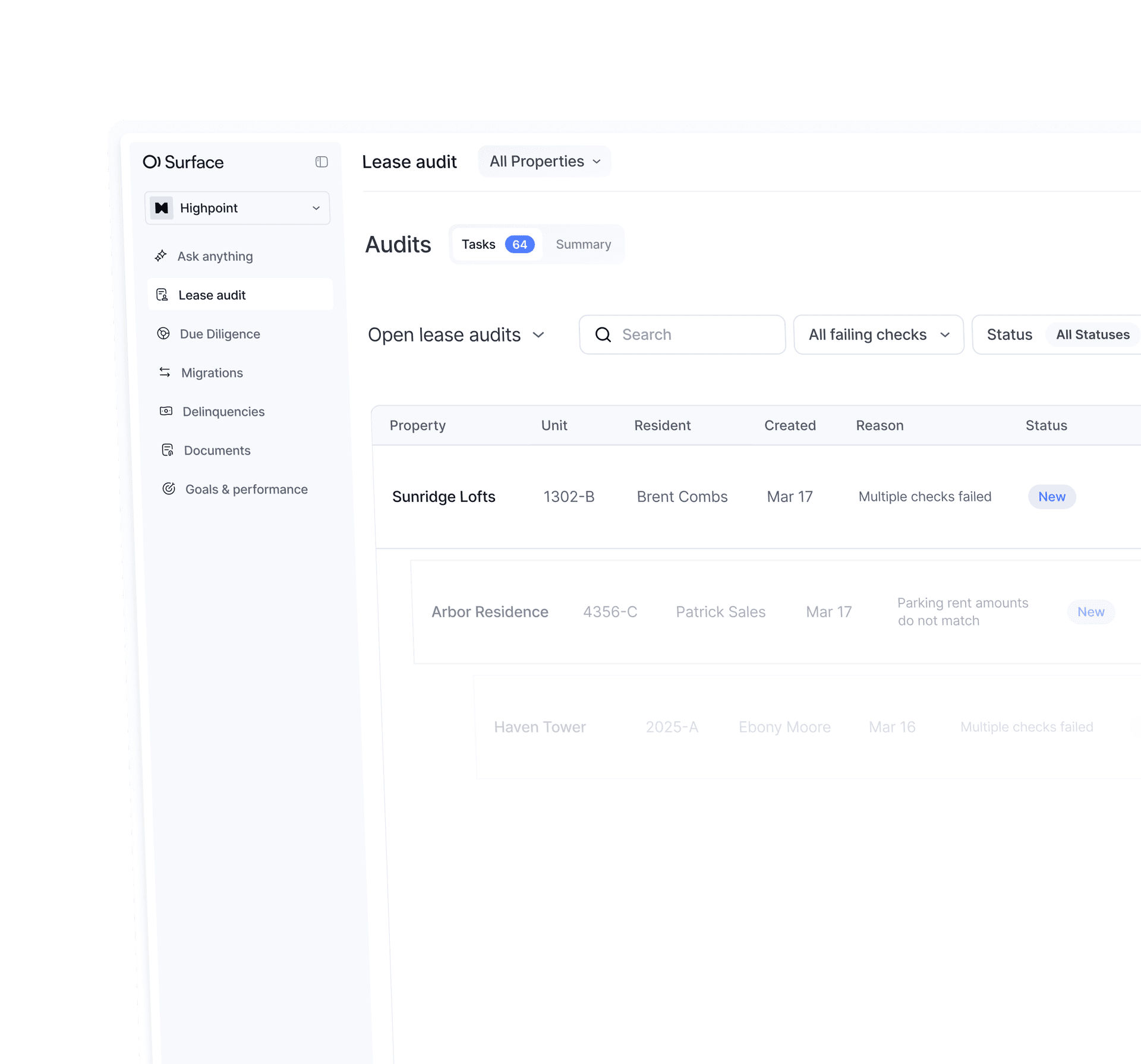
Lease data is one of the most error-prone inputs in real estate investing. It is also one of the most valuable, since leases drive the income.
AI lease intelligence tools:
- Extract structured data from lease documents
- Compare executed leases to underwriting assumptions
- Monitor lease compliance over time
- Flag discrepancies between the lease and the ledger
This supports both acquisition diligence and ongoing asset oversight. A lease that does not match its billing is lost income, whether it surfaces before or after close. Our guide to the lease audit process covers how this validation works.
AI Tools for Document Management
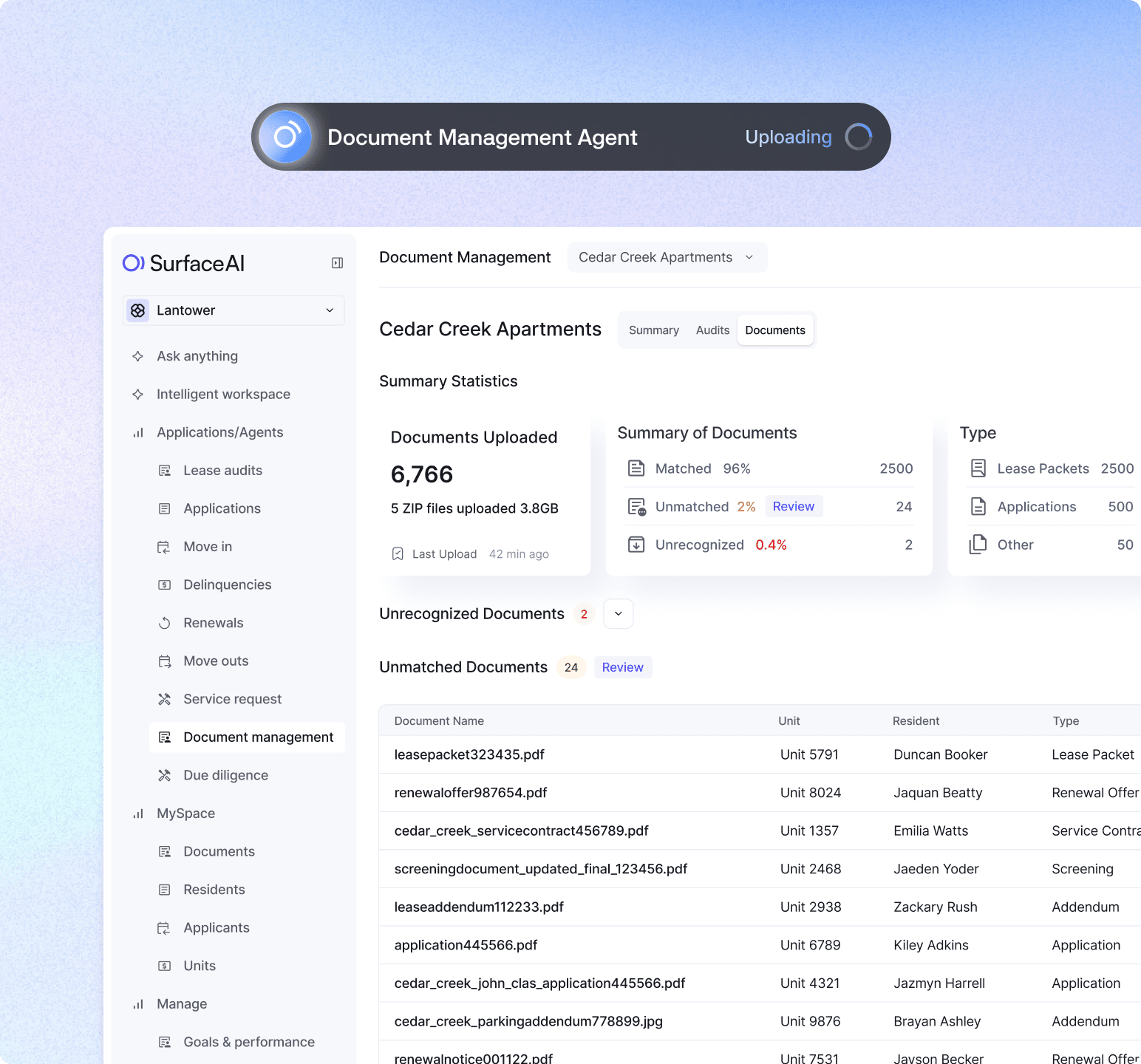
During acquisitions, document sprawl introduces operational risk. Files arrive from many sources in many formats, and gaps are easy to miss.
AI-enabled document tools help investors:
- Organize and classify lease documents
- Validate completeness
- Maintain traceability back to source files
- Flag missing or unsigned documents
This reduces friction during diligence and supports audit readiness. A missing document is both a compliance gap and a hidden risk. No one can verify a charge against a document that is not there.
AI Tools for Portfolio Monitoring
Analysis does not end at close. The best investors apply AI across the hold period, not just the deal.
AI portfolio monitoring tools:
- Track lease compliance across every property
- Surface revenue discrepancies as they form
- Flag risk signals before they compound
- Give leadership one accurate portfolio view
This turns AI from a one-time diligence tool into an ongoing oversight layer. The same checks that protect a deal at close protect the income through the hold.

How SurfaceAI Fits Into the Investor AI Stack
SurfaceAI is not an investment marketplace or an underwriting engine. The platform acts as an AI analysis and validation layer that supports investors across the lifecycle.
The platform helps investors by:
- Analyzing leases during acquisitions
- Auditing executed leases post-close
- Organizing lease and diligence documents
- Surfacing portfolio-wide risk signals
SurfaceAI reads the underlying leases and compares them against the rent roll and ledger. The platform flags each discrepancy that represents lost revenue or risk. It integrates with existing systems rather than replacing them.
For an investor, that means the numbers behind a deal hold up against the source, not just on trust.
What to Look for When Choosing AI Tools for Real Estate Investing
Not every tool labeled AI delivers real value. Investors evaluating AI tools should prioritize a few things.
- Accuracy and explainability. The tool should show its work, not just produce an answer.
- Full-document coverage. Sampling misses the errors that cost the most.
- Integration with existing workflows. The tool should fit the stack, not demand a parallel one.
- Strong governance and oversight. A human should judge what the AI flags.
- Clear linkage to real operational data. The tool should validate against source documents.
AI delivers the most value when it reduces uncertainty rather than adding complexity.
AI is changing real estate investment analysis by allowing underwriting teams to synthesize far more property and borrower data than traditional models can handle efficiently. MetaProp notes that modern AI can combine fragmented signals such as property-level operating performance, rental data, market information, development history, and financial inputs to produce faster and more defensible underwriting decisions. See MetaProp’s analysis of AI-driven real estate underwriting →
Conclusion
The best AI tools for real estate investors support real investment workflows. That spans deal analysis, due diligence, lease intelligence, document management, and portfolio oversight.
By applying AI to the document-heavy, high-risk stages of the process, investors gain speed, consistency, and confidence. The common thread across every category is accuracy. A tool that works fast but validates nothing just produces confident, wrong answers faster.
SurfaceAI brings AI where it matters most. The platform validates leases, reduces diligence risk, and supports better investment decisions on data investors can trust.
Frequently Asked Questions