
How to Prevent Multifamily Lease Revenue Leakage

Revenue leakage in multifamily rarely comes from one obvious mistake.
It usually builds from small lease, billing, document, and compliance gaps that remain unresolved across the portfolio.
- The lease approves a fee, but nobody bills it.
- A concession expires, but the PMS still shows it as active.
- Renewal term does not match the property management software.
- Resident file is missing an addendum.
- The onsite team never uploads a takeover document after the acquisition.
Individually, these issues may look small. Across hundreds or thousands of units, they can create meaningful NOI impact on the bottom line.
Multifamily lease management needs to change. It should be continuous, automated, and connected to the systems operators already use.
The goal is not just to audit leases occasionally. The goal is to catch revenue leakage before it embeds itself in day-to-day operations.
For broader operational automation context, see How to Automate Multifamily Property Operations in 2026 →
Why Revenue Leakage Happens in Multifamily Lease Management
Multifamily revenue leakage often happens when lease terms, system records, billing data, and documents do not stay aligned.
The most common causes include:
- lease terms entered incorrectly into the PMS
- recurring fees missing from billing records
- concessions not applied or removed correctly
- renewal terms that conflict with the original lease
- missing addenda during acquisitions or takeovers
- manual lease audit delays
- inconsistent document workflows
- compliance issues that are discovered too late
The problem is not always that teams do not know what to check. The review process is the real issue. It is often too manual, too periodic, and disconnected from the property management software.
The issue is material. Small billing and expense gaps compound at the NOI level. That risk grows when operators manage revenue and operating expenses across larger portfolios, as shown in Trepp’s multifamily operating expense analysis →
Multifamily Lease Management Should Be Continuous
Traditional lease management often works like a cleanup cycle.
Teams review signed leases at specific moments. Those triggers include an acquisition, a takeover, a financial reporting deadline, or a visible discrepancy.
That approach creates gaps. By the time teams discover an issue, the damage is often already done. The issue may have affected billing, reporting, compliance, or cash flow for months.
Continuous multifamily lease management works differently. It creates an ongoing process for monitoring:
- lease terms
- rent roll accuracy
- billing records
- concessions
- recurring charges
- lease expirations
- required documents
- compliance-sensitive fields
- operational exceptions
This shifts the process from reactive cleanup to ongoing revenue control. It also helps operators make informed decisions about long term asset performance.
The Main Sources of Lease Revenue Leakage
1. Rent Roll and Lease Mismatches
One of the most common leakage sources is a mismatch between the executed lease and the rent roll.
Examples include:
- lease rent differs from PMS rent
- renewal rent is not updated correctly
- lease expiration dates conflict
- occupancy status is incorrect
- resident records do not match lease files
These issues affect reporting confidence and can distort asset-level performance.
For a deeper workflow, see rent roll to lease reconciliation for multifamily M&A →
2. Missing Recurring Charges
Revenue leakage often comes from charges that should be billed but are not.
Examples include:
- parking fees
- storage fees
- pet fees
- utility reimbursements
- amenity charges
- short-term lease premiums
- other recurring add-on charges
These can be difficult to identify manually. They may live in addenda, fee schedules, resident notes, or lease attachments rather than the main contract terms.
3. Concession Errors
Concessions are another common leakage source.
Errors may include:
- concession applied for too long
- concession not documented clearly
- concession entered incorrectly
- concession terms not reflected in billing
- expired concession still affecting rent payment amounts
Concession errors matter because they directly affect effective rent and NOI.
4. Missing Lease Documents
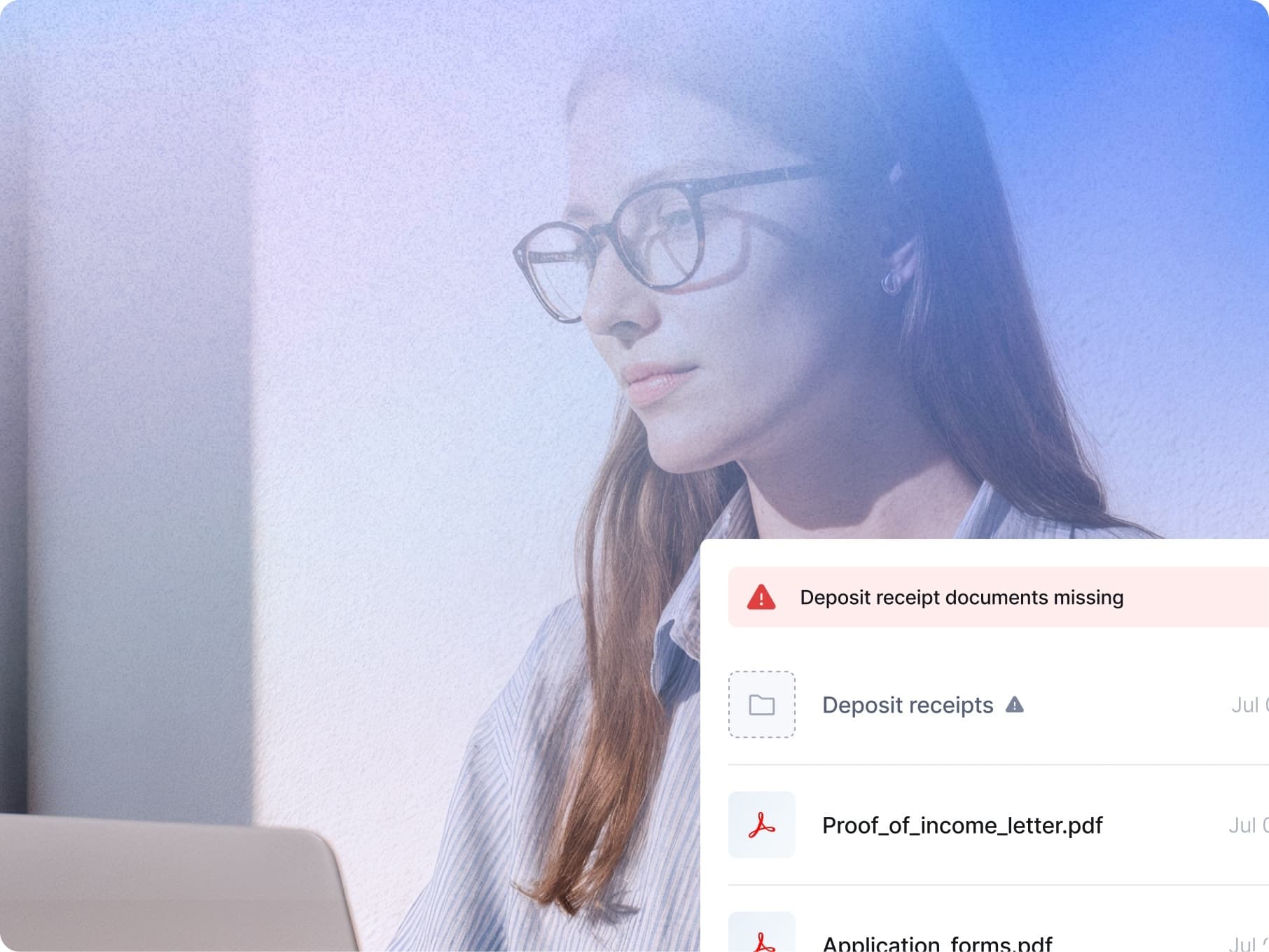
If the document is missing, teams cannot validate the charge.
Missing records may include:
- active lease
- renewal agreement
- concession addendum
- pet addendum
- parking agreement
- storage agreement
- utility addendum
- compliance document
This is especially common during acquisitions and property handovers. For takeover-specific workflows, see Multifamily Takeover Documents Guide for 2026 →
5. Compliance Gaps
Lease compliance is not only a legal issue. It is also an operational and financial issue.
Weak lease documentation weakens enforcement. If required lease agreements or addenda are incomplete or missing, teams lose confidence enforcing charges, renewals, policies, or resident obligations.
Compliance gaps can also create post-close exposure after real estate due diligence.
Step 1: Establish the Lease as the Source of Truth
Revenue leakage prevention starts with the lease. The real estate document defines what teams should bill, enforce, and monitor.
The lease and its related addenda should confirm:
- base rent
- lease term
- renewal terms
- recurring charges
- concessions
- utility responsibilities
- parking or storage fees
- pet terms
- required notices
- compliance obligations
The property management software remains the operational system of record. But the lease file is what validates whether the system data is correct.
A strong process for managing lease data compares both continuously.
Step 2: Connect Lease Records to Property Management Software
Lease management cannot sit outside the PMS workflow.
If lease review happens in spreadsheets while billing happens in the PMS, discrepancies are harder to catch and slower to resolve.
Operators should connect lease review to property management software so teams can compare:
- executed lease terms
- rent roll data
- billing records
- resident ledgers
- concessions
- recurring charges
- document status
The objective is not to replace the PMS. The objective is to validate the data inside it.
Automation closes the gap between lease documents and property management software. Teams can then identify revenue-impacting issues before they become long-term leakage.
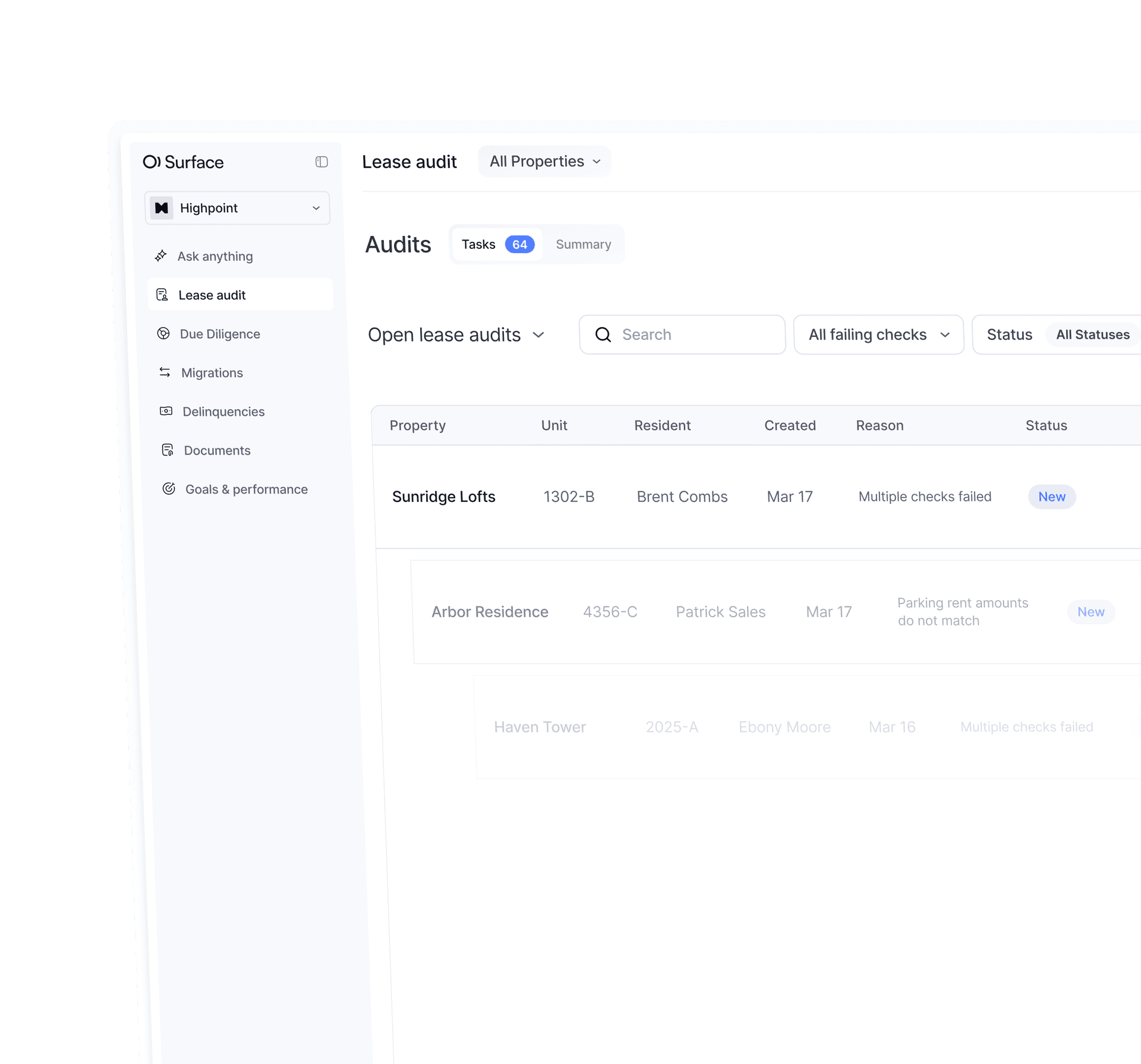
Step 3: Use Lease Audit Automation to Surface Exceptions
Lease audit automation helps operators move away from manual sampling and periodic review.
Instead of asking teams to manually compare every lease against every system record, automation can flag exceptions such as:
- rent mismatch
- missing charge
- incorrect concession
- missing addendum
- lease date conflict
- unsupported billing record
- incomplete document package
- compliance exception
This creates an exception-based workflow. Teams do not need to inspect every record equally. They can focus on the discrepancies most likely to affect revenue, compliance, or reporting.
For related audit workflows, see automated lease auditing solution for multifamily operations. For the case for continuous review, see why lease audits shouldn’t be occasional →
Step 4: Improve Document Management for Lease Files
Revenue leakage prevention depends heavily on how well teams manage property lease files.
If documents are missing, mislabeled, duplicated, or disconnected from the resident record, lease validation becomes unreliable.
A strong document workflow should help teams:
- classify lease documents
- match files to residents and units
- identify missing records
- connect addenda to master leases
- flag duplicate or outdated versions
- support takeover document review
- maintain a clean audit trail
This matters during ongoing operations, but it becomes especially important during acquisitions. When a property changes ownership or management, document gaps can move directly into billing, compliance, and reporting workflows.
For error prevention during takeovers, see How to Prevent Takeover Document Errors in 2026 →
Strong lease documentation also supports audit readiness. According to the Journal of Accountancy’s lease accounting guidance lease accounting guidance emphasizes identifying lease arrangements. It also stresses maintaining documentation around controls, assumptions, and review processes.
Step 5: Monitor Lease Compliance Continuously
Lease compliance should not be reviewed only during scheduled audits.
Continuous compliance monitoring helps operators ensure compliance across:
- required documents
- incomplete addenda
- expired lease terms
- inconsistent resident files
- unsupported charges
- missing disclosures
- renewal discrepancies
This is especially important across large rental properties portfolios where small gaps can scale quickly.
Continuous monitoring also helps teams protect revenue. Lease compliance drives billing accuracy. If the documentation does not support the charge, the revenue may be harder to defend or recover.
For compliance setup context, see lease compliance monitoring setup for multifamily →
Step 6: Connect Real Estate Due Diligence to Ongoing Operations
Revenue leakage often starts during acquisition transitions.
During real estate due diligence, teams may identify lease issues, document gaps, or rent roll inconsistencies. But if teams do not carry those findings into post-close operations, the issues remain unresolved.
A better workflow connects:
- diligence findings
- takeover documents
- lease audit results
- PMS setup
- billing review
- compliance monitoring
- post-close action items
This prevents issues from being discovered during diligence and then lost during handoff. For multifamily operators, the goal is continuity from acquisition to ongoing lease management.
Step 7: Prioritize Revenue Leakage by Materiality
Not every lease exception has the same financial impact.
Operators should prioritize exceptions based on:
- recurring revenue impact
- number of affected units
- compliance risk
- probability of error
- ease of correction
- portfolio-wide pattern
High-priority issues usually include:
- recurring charges missing across multiple units
- concessions that remain active after expiration
- rent mismatches across renewal groups
- missing documents tied to enforceable charges
- repeated billing discrepancies by property or fee type
This allows teams to focus first on leakage that affects NOI.
Step 8: Build a Revenue Leakage Prevention Dashboard
A strong lease management workflow should give operators visibility into the health of revenue controls.
Useful metrics include:
- lease discrepancies identified
- missing charges found
- concession errors flagged
- missing documents by property
- compliance exceptions by category
- revenue leakage recovered
- unresolved exceptions
- average time to resolution
- repeat issue patterns
This helps leadership move from anecdotal audit findings to measurable operational control.It supports better forecasting for financial reporting. It also gives operators clearer visibility into how the current pricing model performs across units.
Where SurfaceAI Fits in Revenue Leakage Prevention
SurfaceAI supports multifamily lease management by helping operators continuously validate lease documents, PMS data, rent rolls, and billing records.
It works alongside existing property management software to help teams:
- automate lease audits
- identify rent and fee discrepancies
- detect missing recurring charges
- flag concession issues
- surface missing or incomplete documents
- support lease compliance monitoring
- connect acquisition diligence to operations
- identify potential revenue leakage across portfolios
SurfaceAI is especially useful for operators managing large portfolios, frequent acquisitions, and complex document workflows.
It helps move lease management from manual review to continuous operational intelligence.
For product context, see the SurfaceAI Lease Audit Agent and Document Management Agent →

“I’ve been thoroughly impressed with the Surface AI lease audit product. It’s exceptionally user-friendly, and the audit results are clear, concise, and easy to interpret. The impact on our student teams has been tremendous—what once took several days can now be completed in just a few hours. The tool also makes it simple to identify and address issues efficiently. I can’t speak highly enough about the value this product brings.”
Amanda Pour, Operations Compliance Manager
Common Mistakes That Allow Revenue Leakage to Continue
Relying on periodic audits only. Periodic audits find issues late. Continuous monitoring catches discrepancies earlier.
Reviewing documents separately from billing. Lease documents and billing records need to be compared together.
Treating missing documents as admin cleanup. Missing documents can directly affect revenue confidence and compliance.
Ignoring acquisition handoff issues. Diligence findings need to carry into post-close operations.
Measuring audit completion instead of revenue control. A completed audit is useful. A resolved revenue discrepancy is more valuable.
Revenue Leakage Prevention Checklist
Use this checklist to strengthen multifamily lease management:
- compare executed leases against PMS records
- reconcile rent roll data with lease terms
- review recurring charges against addenda
- monitor concession start and end dates
- identify missing active leases and renewals
- validate parking, storage, utility, and pet fees
- separate missing documents from billing discrepancies
- route exceptions to the right team
- track resolution status
- monitor repeat issues by property or fee type
- carry diligence findings into operations
- connect lease review to work orders and operational tickets where relevant
- use lease audit automation for continuous review
Key Takeaway
Multifamily lease management is one of the most important controls for preventing revenue leakage.
Alignment matters across every system. When lease documents, rent rolls, billing records, and the PMS drift apart, small discrepancies become meaningful NOI loss.
The strongest operators catch issues early. They rely on continuous lease management, lease audit automation, structured document workflows, and compliance monitoring. That prevents leakage from becoming routine.
Conclusion
Revenue leakage prevention is not a one-time audit project.
It requires a continuous lease management model. That model validates lease terms, monitors compliance, connects document workflows, and compares operating data against the property management software.
If your team wants to reduce revenue leakage and strengthen lease compliance, book a demo. SurfaceAI helps operators automate lease review and prevent revenue loss before it compounds.
Frequently Asked Questions on How to Prevent Multifamily Lease Revenue Leakage