
Property Portfolio Optimization: Strategies to Improve Performance
A portfolio can grow without getting more efficient. Adding properties or units makes it bigger.
But bigger does not mean stronger returns. In fact, large portfolios can hide weak spots. Problems get buried in averages, regional reports, and thousands of small decisions.
Property portfolio optimization finds where performance can improve across a group of real estate assets. It points attention, capital, and people at the opportunities that matter most.
That might mean raising revenue at one property. It might mean cutting costs at another. Or closing documentation gaps across a region. Or fixing a process that keeps producing weak results.
The goal is not to maximize every metric. It is to make the portfolio perform better as a whole. For multifamily owners and operators, that takes three things.
A clear view of each property. An understanding of why results differ. And a repeatable way to act on what you find.
What Is Property Portfolio Optimization?
Property portfolio optimization is the process of improving how a real estate portfolio performs. You analyze assets one by one and as a group. You find opportunities and weak spots. Then you make decisions that improve efficiency, income, resilience, or long-term value.
It draws on several areas at once:
- revenue management
- expense control
- capital planning
- operational performance
- risk management
- asset management
- data analysis
Basic reporting tells you what happened. Optimization is different. It asks where performance can improve, why the chance is there, and what to do next.

Why Portfolio Averages Can Hide Property Problems
Averages are useful. They can also mislead.
Picture a ten-property portfolio with healthy overall occupancy. At first glance, it looks strong. But the average can hide real problems:
- two properties may have high delinquency
- one may carry too many concessions
- several may be missing recurring charges
- another may have high turnover
- a new asset may still lack complete lease documentation
Strong results elsewhere cover up those gaps. So optimization means looking at three levels.
- The portfolio level asks how the business is doing.
- The property level asks which assets lead or lag.
- The unit level asks what is actually causing the gap.
Skip that last step and you treat symptoms, not causes.
Operational execution is becoming a larger driver of multifamily investment performance. Preqin’s 2026 analysis of private real estate found that residential assets made up 29% of North American transaction volume.
They also accounted for 36% of deal value in 2025. Industry participants emphasized asset selection, local market expertise, and operational execution. They saw these as increasingly important sources of value creation.
1. Set Clear Portfolio Objectives
Optimization starts with a simple question. What should the portfolio achieve? Different strategies need different priorities.
A stabilized portfolio may focus on NOI growth, steady occupancy, and expense efficiency. A value-add portfolio may focus on renovations, turnover, and capital deployment. A portfolio near sale may focus on clean documentation and an accurate rent roll.
Set a few portfolio-wide goals that match your business goals, business objectives, and real estate strategy. Without clear priorities, optimization becomes a pile of unrelated projects.
2. Benchmark Properties Against Each Other
One of the best strategies to optimize property portfolio performance is to compare similar assets.
Benchmark them across metrics like these:
- occupancy and effective rent
- delinquency and renewal rates
- operating costs and maintenance spend
- concession use and turnover
- revenue per unit and NOI margin
The point is not just to rank them. It is to spot real gaps. If six similar communities perform alike but one trails, that gap is worth a look.
Benchmarking makes scale an advantage. Every property becomes a reference point for the rest.
3. Separate Market Problems From Operational Problems
Not every weak property has an operating problem. Market conditions matter too.
A property may face new supply, slower demand, or pressure on rents. Those are market trends you cannot control. Other gaps are operational. Think inconsistent leasing, too many concessions, billing errors, or slow maintenance.
Real estate optimization means telling these apart. A market problem may need repositioning. An operational problem can often be fixed right away.
4. Capture Every Dollar of Revenue
Look at the whole revenue picture, not just base rent. Multifamily income also includes parking, pet rent, storage, utilities, and amenity fees.
The real question is whether these charges are applied consistently.
A charge may be in the lease but never entered in the system. A concession may run too long. An amendment may change a resident’s obligation without flowing downstream. That is revenue leakage.
At one unit, the gap looks tiny. Across thousands of units, it becomes a major opportunity. Before you chase new revenue, confirm you are capturing the revenue you already have. For more, see our guide to preventing lease revenue leakage →
5. Improve Expense Efficiency Without Cutting Blindly
Lower expenses do not always mean better performance. Cut maintenance too hard and you raise future costs.
Good optimization separates waste from investment. Review operating costs and operational costs by category and property. Look for odd vendor costs, duplicate services, utility waste, and high occupancy costs at some sites but not others.
Then ask why those gaps exist. The aim is operational efficiency and real cost savings without hurting the resident experience.
6. Optimize Capital Allocation
Capital is limited. Optimization decides where each dollar does the most good.
Capital choices include renovations, building systems, amenities, technology, and deferred maintenance. Do not spread money evenly. Weigh each option by expected return, urgency, property strategy, and remaining hold period.
A large investment may be smart at one property and wasteful at another. Portfolio-level planning lets portfolio managers compare those options side by side. Send resources to opportunity and risk, not just to the biggest buildings.
7. Standardize What Works
Do not stop at finding your best properties. Ask what they do differently.
Top communities tend to do a few things better. Think renewals, collections, maintenance, and record-keeping. Once you spot those habits, decide whether to roll them out everywhere. The goal is to turn one property’s success into repeatable portfolio performance.
8. Weigh Risk Alongside Return
Strong short-term results can still hide real risk. Optimization should look past income alone.
Review lease documentation, compliance exposure, deferred maintenance, insurance costs, and data gaps. An asset with great NOI today can get expensive fast if these go unchecked. Return and risk work best when you judge them together. For more, see our guide to property risk management →
9. Improve the Quality of Property Data
Every decision depends on data. If the data is wrong, the strategy can be wrong too.
Teams pull from many sources: property management systems, accounting platforms, rent rolls, lease documents, and spreadsheets. Those sources do not always agree.
A dashboard may show one rent while the lease shows another. That is not an analytics problem. It is a validation problem. Data driven decisions need a way to check that the records actually support the numbers leadership uses.
This is also where the work should shift from dashboards to exceptions. When a manager oversees thousands of units, another dashboard adds noise, not clarity. Instead, technology can surface only what needs attention:
- odd rent discrepancies.
- missing documents.
- unusual concessions.
- compliance gaps.
The work changes from “review everything” to “review what has already been flagged.” That matters more as portfolios grow.
10. Measure Whether It Worked
Every major move should have a clear result. Change a collections workflow, add documentation controls, or renovate units, and then measure the outcome.
Depending on the move, track NOI, revenue per unit, delinquency, effective rent, renewal rates, turnover, or compliance exceptions. Optimization is a loop. Identify. Act. Measure. Adjust. Repeat.
Where AI Fits Into Property Portfolio Optimization
AI widens the kind of information you can include in portfolio analysis. Old reporting tools mostly read structured fields. But key facts often live inside leases, addenda, and resident documents.
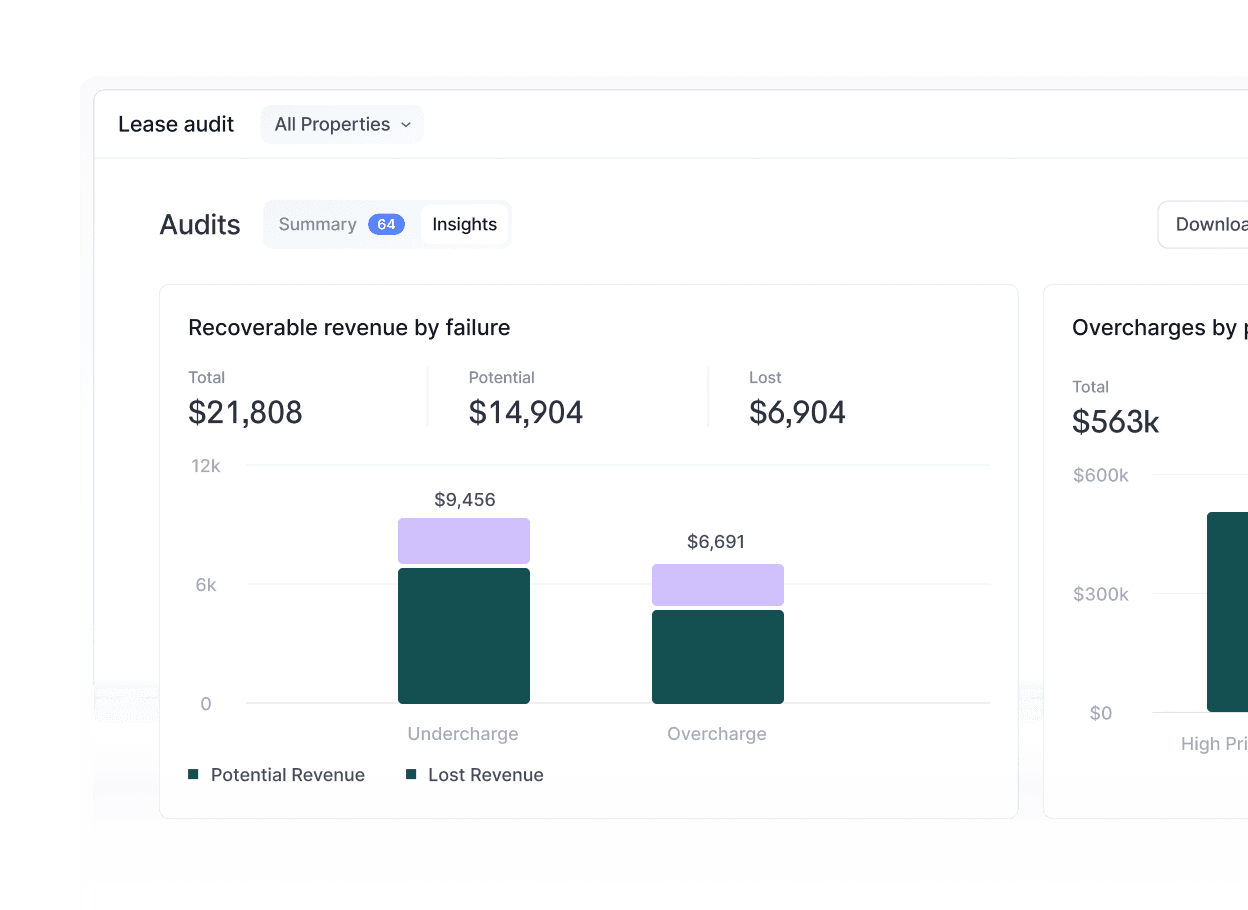
AI can turn those documents into usable data. It can compare them against system records in real time. For example, you may see a recurring charge in a lease but find it missing from the PMS.
At one unit, that is an exception. Across a portfolio, it may signal a process problem.
This is where platforms such as SurfaceAI support real estate optimization. It reads lease documents and operational records together. That surfaces discrepancies, missing data, and revenue exceptions that normal reporting misses.
The point is not to replace your management software. It is to make the data flowing through it more reliable. For product context, see the SurfaceAI Lease Audit Agent and Document Management Agent →
A Property Portfolio Optimization Framework
Use this framework during portfolio reviews:
- Strategy: set investment goals, targets, and hold priorities
- Revenue: benchmark rents, review concessions, check for leakage
- Expenses: compare costs, review vendors, find inefficiencies
- Operations: compare performance, standardize best practices
- Capital: rank projects by return and risk
- Risk: review compliance, documentation, and weak points
- Data: validate records, reconcile gaps, improve visibility
- Execution: assign owners, prioritize, track results
Common Optimization Mistakes
Chasing one metric alone. Higher occupancy looks good until concessions eat the gains. Judge metrics together.
Comparing properties that are not alike. Assets in different markets or stages should not share the same targets.
Trusting system data blindly. Reports only reflect what was entered. Validate the important records.
Watching only weak properties. Strong ones hold lessons too. Learn why they win.
Fixing everything at once. Rank by impact, risk, and effort instead.
Conclusion
Property portfolio optimization is about making better decisions across many assets. It takes more than reading dashboards or pushing every property toward one benchmark. You need to know where results differ, why, and which actions will help most.
The best real estate portfolio optimization blends financial performance, operations, capital planning, risk, and reliable data into one process.
As portfolios grow, spotting these chances by hand gets harder. Better data validation helps. So does AI-driven exception detection. Together they help teams see where revenue, documentation, or operational issues need attention first.
Strong real estate portfolio management, and smart real estate investing, both depend on that clarity. Do you want to find hidden opportunities across your operations? Do you want to turn portfolio data into clear priorities? Book a demo to see how SurfaceAI supports a more precise approach to property portfolio optimization.
Frequently Asked Questions About Property Portfolio Optimization