
Rent Roll Software: How to Analyze and Validate the Numbers That Drive Value

The rent roll is the single most important document in multifamily. The report lists every unit, every resident, and every charge. That one document drives the valuation, the underwriting, and the reporting.
When the rent roll is right, decisions rest on solid ground. When it is wrong, every number built on it is wrong too.
That is the problem rent roll software exists to solve. A spreadsheet can display a rent roll, but cannot tell you whether the rent roll is accurate. Analyzing and validating the numbers is where the real value sits.
The goal is catching the gaps between what the rent roll claims and what the leases actually say. This guide explains what rent roll software does, what to look for, and why analysis matters more than display.
Rent-roll accuracy is a core part of multifamily underwriting. Fannie Mae identifies incomplete or inconsistent rent rolls, discrepancies between reported occupancy and property inspections, and differences between reported and actual underwritten cash flow as risks that can undermine reliable financial assessment. See Fannie Mae’s guidance on multifamily underwriting and rent-roll verification →
What Is a Rent Roll?
Start with the rent roll definition. A rent roll is a report that summarizes the rental income of a property. The report lists each unit, the resident, the lease terms, the rent, and any additional charges or concessions.
The rent roll is the financial snapshot of a property. Lenders use it to underwrite loans. Buyers use it to value acquisitions. Operators use it to track income.
Because so many decisions depend on it, the accuracy of the rent roll matters enormously. That accuracy is exactly what most tools fail to check.
What Is Rent Roll Software?
Rent roll software is a tool that helps operators analyze and validate the rent roll rather than just store it. The distinction matters, because two very different kinds of tools carry the name.
The first kind produces and displays the rent roll. Property management systems generate the report from the data entered into them. Useful, but the output only reflects what someone keyed in, errors and all.
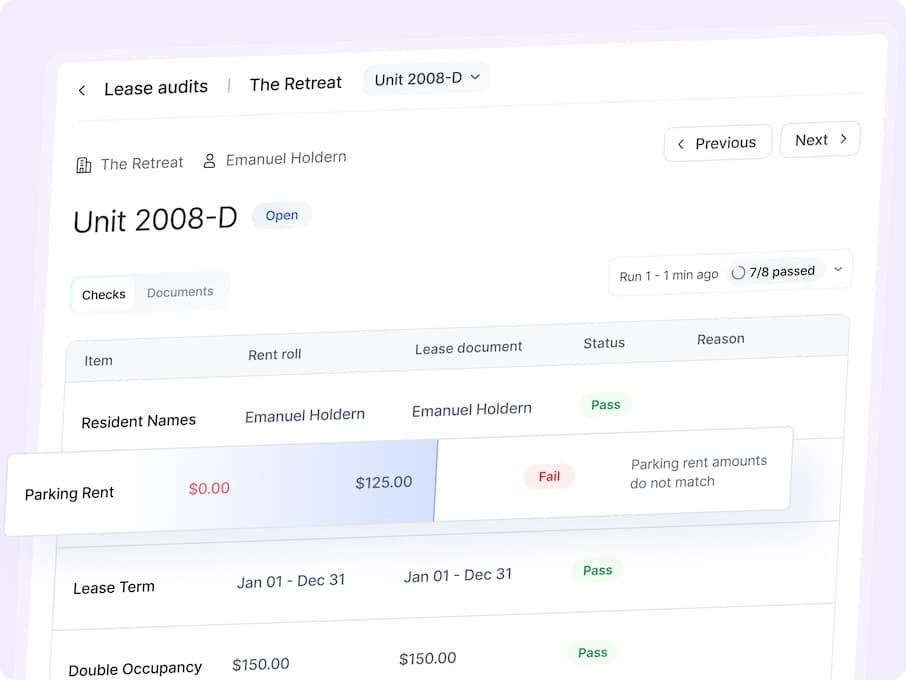
The second kind analyzes the rent roll for accuracy. This is where software for rent roll analysis earns its keep. The tool checks the rent roll against the source leases and flags where the two disagree. A rent roll that looks complete can still be wrong, and only analysis catches that.
Why Rent Roll Analysis Matters
A rent roll is only as good as the data behind it, and that data drifts over time. Leases change, concessions expire, escalations take effect or fail to, and residents turn over. Each change is a chance for the rent roll to fall out of step with the leases.
Rent roll analysis closes that gap. The analysis compares every line of the rent roll against the executed lease. That confirms the rent is right, the concessions are current, and the charges hold up. Where the rent roll and the lease disagree, the analysis flags it.
This matters most where money is at stake. A rent roll that overstates income inflates the value of a property. A buyer overpays, or a lender over-lends.
A rent roll that omits a charge means income the property earned but never collected. Our guide to revenue leakage covers how these gaps drain income.
What Software for Rent Roll Analytics Should Do
Not every tool labeled rent roll software delivers real analysis. Strong software for rent roll analytics does a few specific things.
Validate against the source. The core job is comparing the rent roll against the executed leases, not trusting the rent roll on its own. This catches the discrepancies that matter.
Cover every unit. A spot check of a few units misses systematic errors. Real analysis checks the full rent roll, because the costliest mistakes hide in the lines no one reviewed.
Flag the exceptions. Good software does not return a clean-looking report. The tool surfaces the specific units and charges where the rent roll and lease disagree. The team knows exactly where to look.
Quantify the impact. The strongest tools report in dollars, showing how much income the discrepancies represent and how much is recoverable.
Common Rent Roll Errors Analysis Catches
A few errors show up again and again when the rent roll gets checked against the leases. Knowing them makes the value of analysis concrete.
Rent mismatches. The rent roll lists a rent that does not match the signed lease. Usually a renewal or amendment never updated the figure. The income looks higher or lower than it truly is.
Expired concessions still applied. A concession ended on paper months ago, yet the rent roll still reflects the discount, quietly reducing income.
Unapplied escalations. The lease schedules a rent increase that never reached the rent roll, so the property collects less than the lease allows.
Missing or unsupported charges. A fee the lease requires never made the rent roll, or a charge appears with no lease behind it. One is lost income, the other is fragile income that may not survive a challenge.
Each error is small on a single unit. Across a portfolio, they compound into a meaningful gap between the rent roll and reality. Surfacing that gap is exactly what rent roll analysis does.
Rent Roll Software Versus a Spreadsheet
Most operators still manage rent roll analysis in a spreadsheet, and for a small property that can work. At portfolio scale, it breaks down.
A spreadsheet holds the numbers but cannot check them. Verifying a rent roll by hand means opening every lease, reading the terms, and comparing them against the rent roll line by line. Across thousands of units, no team has the hours. The check becomes a sample, and the sample misses the systematic errors.
Software tools for rent roll analysis remove that limit. What a person could never finish by hand runs automatically across the whole portfolio.
The analysis stays current as leases change. The spreadsheet becomes a record of the past. The software becomes a live check on the present.
How Rent Roll Software Fits Due Diligence
Rent roll analysis matters most during an acquisition, when the rent roll drives the price. A buyer who trusts the seller’s rent roll without checking it against the leases is underwriting on faith.
Strong rent roll software turns that faith into verification. Before close, it compares the rent roll against every lease. The analysis surfaces the overstated rents, expired concessions, and unapplied escalations that would otherwise erode returns after the deal. Our guide to rent roll to lease reconciliation covers this acquisition-stage check in depth.
The same analysis protects the operation after close. The system catches new discrepancies as leases change, so the rent roll stays accurate month after month.
How SurfaceAI Analyzes the Rent Roll
AI and automation can strengthen financial data review by applying consistent tests across large datasets and surfacing exceptions for human review. AICPA & CIMA describes how automated audit testing dramatically reduced manual processing time, with AI now being expanded to help flag higher-risk transactions and improve ongoing analysis.
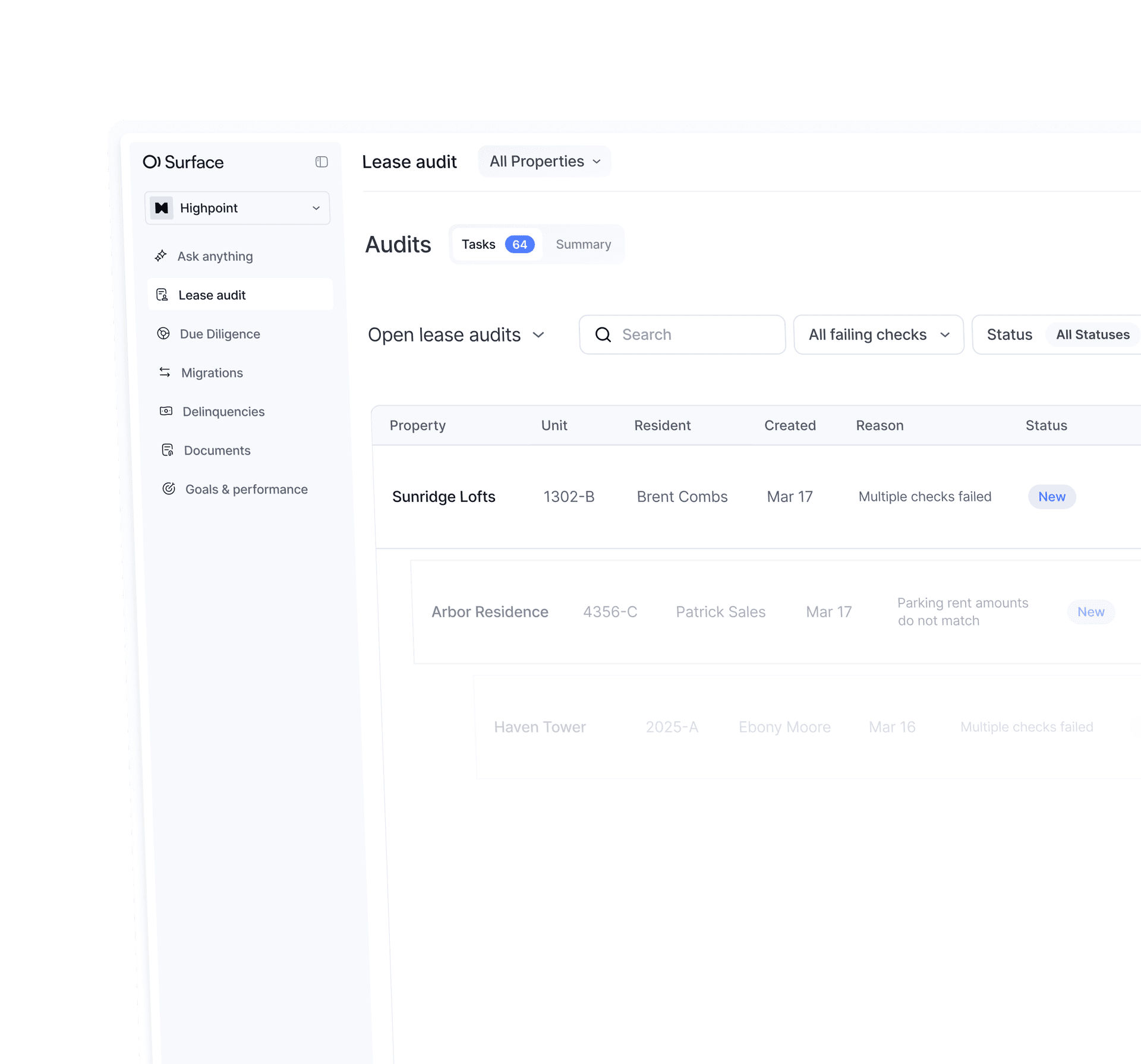
SurfaceAI works as rent roll analysis software for multifamily. Rather than producing the rent roll, it validates the one a property management system already generates.
The platform reads every lease and compares the terms against the rent roll and ledger. The system flags each discrepancy that represents lost revenue or compliance risk. A rent that does not match the lease, a concession that expired, a charge the lease requires but the rent roll omits, each surfaces as a specific, correctable item. The analysis runs across the whole portfolio and stays current as leases change.
For an operator, that turns the rent roll from a report nobody fully trusts into a verified record. Our guide to why lease audits miss revenue leaks covers the validation behind it.

“I’ve been thoroughly impressed with the Surface AI lease audit product. It’s exceptionally user-friendly, and the audit results are clear, concise, and easy to interpret. The impact on our student teams has been tremendous—what once took several days can now be completed in just a few hours. The tool also makes it simple to identify and address issues efficiently. I can’t speak highly enough about the value this product brings.”
Amanda Pour, Operations Compliance Manager
Conclusion
The rent roll drives the most important decisions in multifamily, which means its accuracy is not optional. Rent roll software that only displays the numbers leaves the hardest question unanswered: are the numbers right?
Analysis answers it. Rent roll software validates the rent roll against the leases, covers every unit, and quantifies the gaps. A document everyone relies on becomes one everyone can trust. Check the rent roll against the source, and the decisions built on it finally rest on solid ground.
Ready to find out whether your rent roll is accurate? Book a demo to see how SurfaceAI validates the numbers that drive value.
Frequently Asked Questions About Rent Roll Software