Why Lease Audits Miss Revenue Leaks in Multifamily

Most multifamily operators run lease audits. Many still lose revenue to leaks those audits should have caught
That is the uncomfortable truth about how most teams practice lease auditing. An audit runs, the system produces a report, and everyone assumes the numbers are now clean.
Then a reconciliation, an acquisition, or a year-end review surfaces the problems. Charges no one ever billed. Concessions that ran too long. Rent that never matched the lease. The audit happened. The leak survived it.
This is not a story about operators who skip audits. It is about audits that run and still miss the money. Understanding why property management lease auditing fails to catch revenue leakage is the first step toward fixing it.
What Revenue Leakage Actually Looks Like
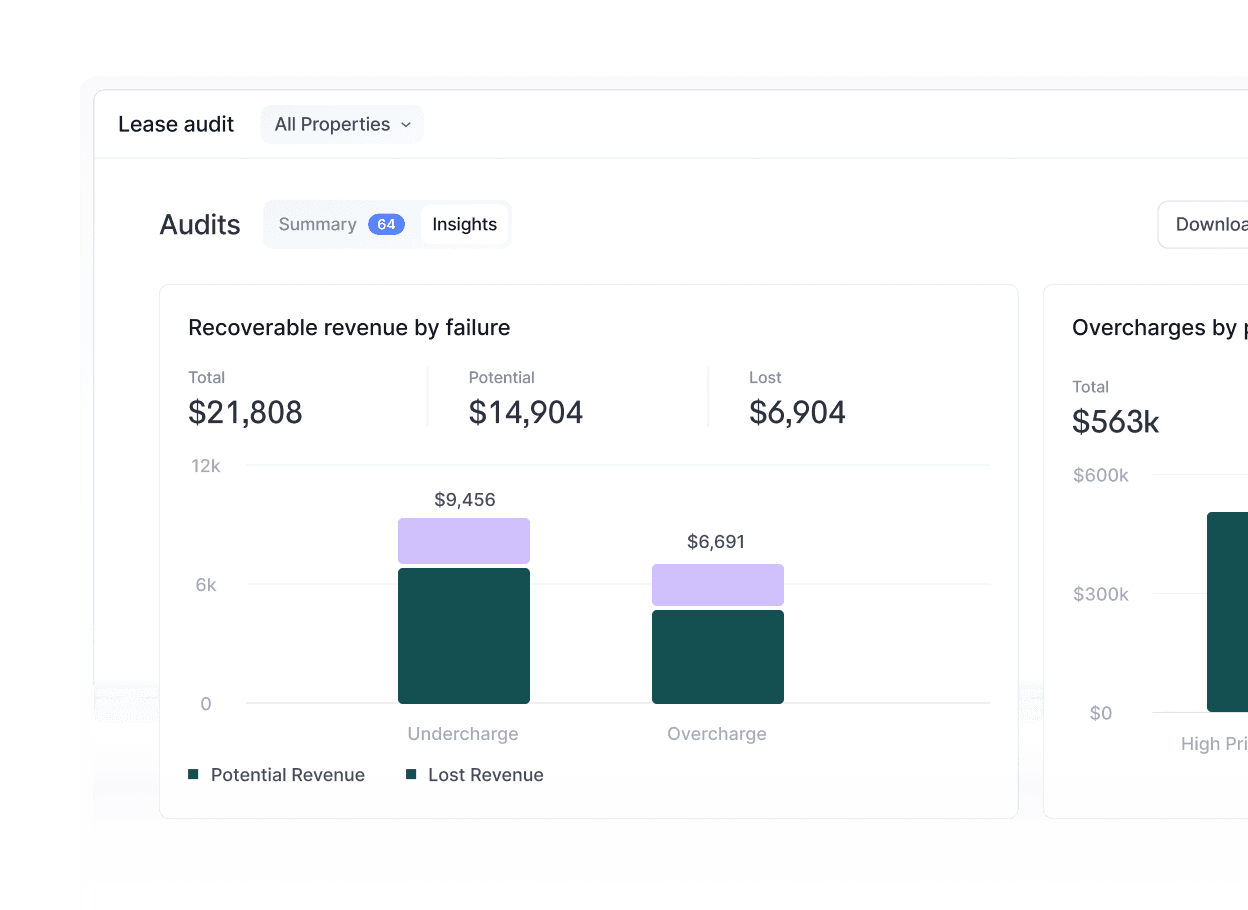
Revenue leakage is the gap between the revenue a portfolio is contractually owed and the revenue it actually collects. It is a direct drain on cash flow. In multifamily, that gap rarely comes from dramatic errors. It comes from small, quiet discrepancies between the lease terms and the rent rolls, repeated across thousands of units.
Common sources of leakage include:
- recurring charges written into a lease but never entered into the system
- concessions that continue past their intended end date
- rent amounts that do not match the executed lease agreement
- utility or fee reimbursements that were never activated
- amendments that changed a resident obligation without flowing downstream
None of these announce themselves. A missing $40 charge does not trigger an alert. It simply never appears. And because it never appears, a routine audit looking at what is in the system will not see it either.
This is the core problem: leakage lives in the space between the lease and the ledger, and most audits only look at one side.
Reason 1: Audits Check the System, Not the Source
The most common failure in property management lease auditing is auditing the wrong thing. Many audits review what is already in the property management software.
They confirm that the recorded charges are internally consistent. The ledger adds up. The reports reconcile against each other.
The problem is that this approach validates the system against itself. If no one entered a charge, the system has nothing to flag. The audit sees a consistent ledger and calls it clean. But the real error is a charge that exists in the lease and nowhere else.
Genuine revenue leakage detection requires comparing the system against the source lease documents, not against itself. That comparison is the only reliable way to identify discrepancies and billing errors. These are the errors that never made it into the ledger.
The executed lease is the ground truth. An audit cannot catch a charge no one billed until it reads the lease and compares it to the ledger. Lease report accuracy depends on that comparison, and most audits skip it.
Reason 2: Sampling Leaves Most Leases Unreviewed
The second failure is scale. Manual lease auditing does not review every lease. It reviews a sample instead. Reading every lease by hand across a large portfolio is not feasible in any reasonable timeframe.
Sampling is a reasonable response to volume, but it has a structural weakness for revenue leakage. Leaks do not spread evenly. One process, one property, or one system migration can introduce a billing error. That error can affect hundreds of units while never appearing in a small sample.
When the contract terms in a lease never reach the ledger, sampling rarely catches it. The audit reviews its sample, finds it clean, and certifies the portfolio. Meanwhile the systematic error sits untouched in the unreviewed majority.
For revenue leakage specifically, sampling is the wrong tool. A representative sample tells you about average conditions. Leakage is often a concentrated, systematic problem that averages hide. Catching it requires screening the full population, not a slice of it.
Reason 3: Audits Happen Too Infrequently
The third failure is timing. Multifamily lease audits are typically periodic. They run quarterly, annually, or at a transaction. Between those points, nothing is watching.
That gap matters because leakage compounds. Say a concession should have expired in March but runs until the next audit in December. It has leaked nine months of revenue before anyone looks.
The audit will eventually catch it, but catching it in December does not recover the months already lost. The lost revenue is simply gone, and the cash flow it should have produced never arrives.
Periodic auditing treats leakage as something to discover after the fact. But the cost of a leak is a function of how long it runs.
An audit that happens twice a year guarantees that every leak runs, on average, for months before detection. The infrequency is not a scheduling detail. It is a direct driver of how much revenue escapes.
Reason 4: Manual Review Is Inconsistent
The fourth failure is human variance. Manual lease review divides work across several reviewers, and each applies a slightly different standard.
One reviewer flags the red flags in a small rent discrepancy. Another lets it pass as a rounding difference. These manual processes produce different results depending on who runs them. One checks amendments against the ledger.
Another does not. The result is that the audit’s findings depend partly on who did the reviewing. Two properties with identical problems can produce different audit results because different people reviewed them.
For rent and lease compliance, that inconsistency lets real errors slip through. Not because they were invisible, but because the reviewer who saw them applied a looser standard.
Consistency problems are hard to see from inside an audit, because each reviewer believes they are being thorough. The variance only becomes visible when someone re-reviews the same leases and gets different findings. By then, the looser standard has already certified the leaks it missed as clean.
Reason 5: Reports Confirm Completion, Not Accuracy
The fifth failure is what the audit produces. Many operators measure lease audits by completion. The report shows key metrics.
How many leases the team reviewed, how many properties it covered, and how far through the portfolio the audit reached. But volume metrics are not the same as accurate financial data.
Completion is not accuracy. A report that says the team reviewed every lease tells you the work got done. It does not tell you whether the work caught the leaks. An audit can achieve full coverage and still miss revenue leakage.
That happens when its method never compared leases to ledgers, never screened the full population against source data, or applied inconsistent standards.
Lease report accuracy is about whether the findings are correct and complete, not whether the process finished. An audit optimized to show completion will produce a clean-looking report while leakage continues underneath it.
Why These Failures Compound at Scale
Each of these failures is manageable on a small portfolio. On a large one, they compound.
A 200-unit property with an occasional missed charge is a minor problem. Consider a 5,000-unit portfolio with a systematic billing error. Reviewers sample it, audit it twice a year, and apply inconsistent standards. That is a structural revenue problem no single audit will catch.
The scale that makes multifamily attractive is the same scale that makes manual, periodic, sample-based auditing insufficient.
This is why revenue leakage tends to grow with portfolio size rather than shrink. More units mean more places for leaks to hide. They also mean more distance between the lease and the ledger, and more reliance on sampling and periodic methods that miss systematic errors. For a fuller picture of where leaks originate, see our guide to preventing multifamily lease revenue leakage →
Revenue leakage is often a data-validation problem before it becomes a financial-reporting problem. ACCA notes that analysts can compare billing data against underlying contracts to identify inaccurate charges and missing invoices. Analytics make it possible to quantify those issues across the full population rather than only a sample. See ACCA’s guidance on using data analytics to identify billing and revenue errors.
What Effective Revenue Leakage Detection Requires
The failures above point directly at what effective auditing needs to do differently. Real revenue leakage prevention starts here, with a method that fixes each structural gap.
It needs to compare leases to the ledger, not the system to itself. It needs to screen the full population, not a sample, because leakage is systematic. It needs to run continuously, not periodically, because the cost of a leak scales with its duration. And it needs to apply consistent rules, not variable human judgment, so findings do not depend on who reviewed which lease.
These requirements are difficult to meet manually. Reading every lease against every ledger entry, continuously and with perfect consistency, is not something a team can do by hand. Not across thousands of units.
This is the structural reason property management lease auditing has historically missed leaks. The method could not match the scale.
Automated approaches change this equation. AI powered software can compare every lease against operational records. It runs continuously rather than quarterly, and applies the same validation rules to every unit. It also produces clear audit trails, which matter as much for ensuring compliance as for catching leaks.
That combination addresses all four structural failures at once. It is why revenue leakage detection has improved most where it moved from manual review to continuous automated validation. For related context on why manual audits miss issues, see our breakdown of reasons manual lease audits miss risks →
Automated audit analytics can help teams evaluate much larger datasets and identify anomalies that traditional review methods may miss. The Journal of Accountancy explains that auditors can use data analytics throughout the audit process. It helps assess risk, detect unusual transactions, and improve both audit accuracy and efficiency. See the Journal of Accountancy’s analysis of data analytics and automation in auditing.

Where SurfaceAI Fits
SurfaceAI was built to close exactly the gap this article describes. It does not replace the property management system where leases and ledgers live. It validates the data those systems contain against the source lease documents.
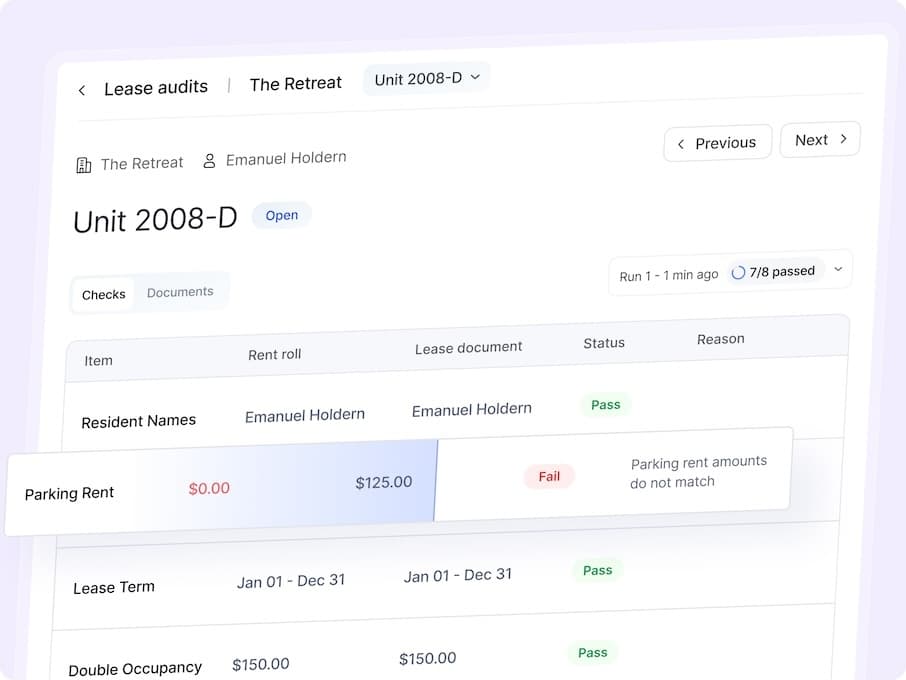
SurfaceAI reads executed leases and compares their terms against the rent roll and ledger. It surfaces the discrepancies that represent revenue leakage: charges in the lease but missing from the ledger, concessions that outlived their terms, rent that does not match. It does this across the full portfolio rather than a sample. It runs continuously rather than periodically, with consistent rules rather than variable review.
That is the difference between two kinds of audit. One confirms the system is internally consistent. The other catches the revenue actually leaking out of it.
Does your team want revenue leakage detection that compares leases to ledgers across the full portfolio? Book a demo to see how SurfaceAI surfaces the leaks periodic audits miss.
Conclusion
Lease audits miss revenue leaks for reasons that are structural, not careless. They
- Check the system instead of the source.
- Sample instead of screening everything.
- Run periodically instead of continuously.
- Rely on inconsistent manual review.
- Measure completion instead of accuracy.
Each of those failures lets a specific kind of leak survive the audit. Together, they explain why operators who audit diligently still lose revenue to errors those audits were meant to catch. The fix is not more frequent versions of the same flawed method.
It is auditing that compares leases to ledgers, covers the whole portfolio, runs continuously, and applies consistent rules. That is how the leaks stop surviving the process designed to find them.
Frequently Asked Questions About Why Lease Audits Miss Revenue Leaks in Multifamily