
The Complete Guide to Multifamily Handover Controls

A multifamily deal can close on time and still start in a hole.
The buyer signs the purchase agreement. The financing clears. But the documents that prove what you just bought arrive late, incomplete, or not at all. The handover, the moment when records pass from the old owner to the new one, is where deal value quietly leaks out.
This guide explains three things. Why multifamily property handover documents go missing, how disorganized records erode deal value, and which controls reduce transition risk. The goal is simple: help operators and investors treat the handover as a controlled process, not a scramble.
What Is a Multifamily Handover?
A handover is the transfer of a property’s records and operational knowledge from one owner or manager to another. It happens at acquisition, at a management change, or during property management transitions where control passes hands.
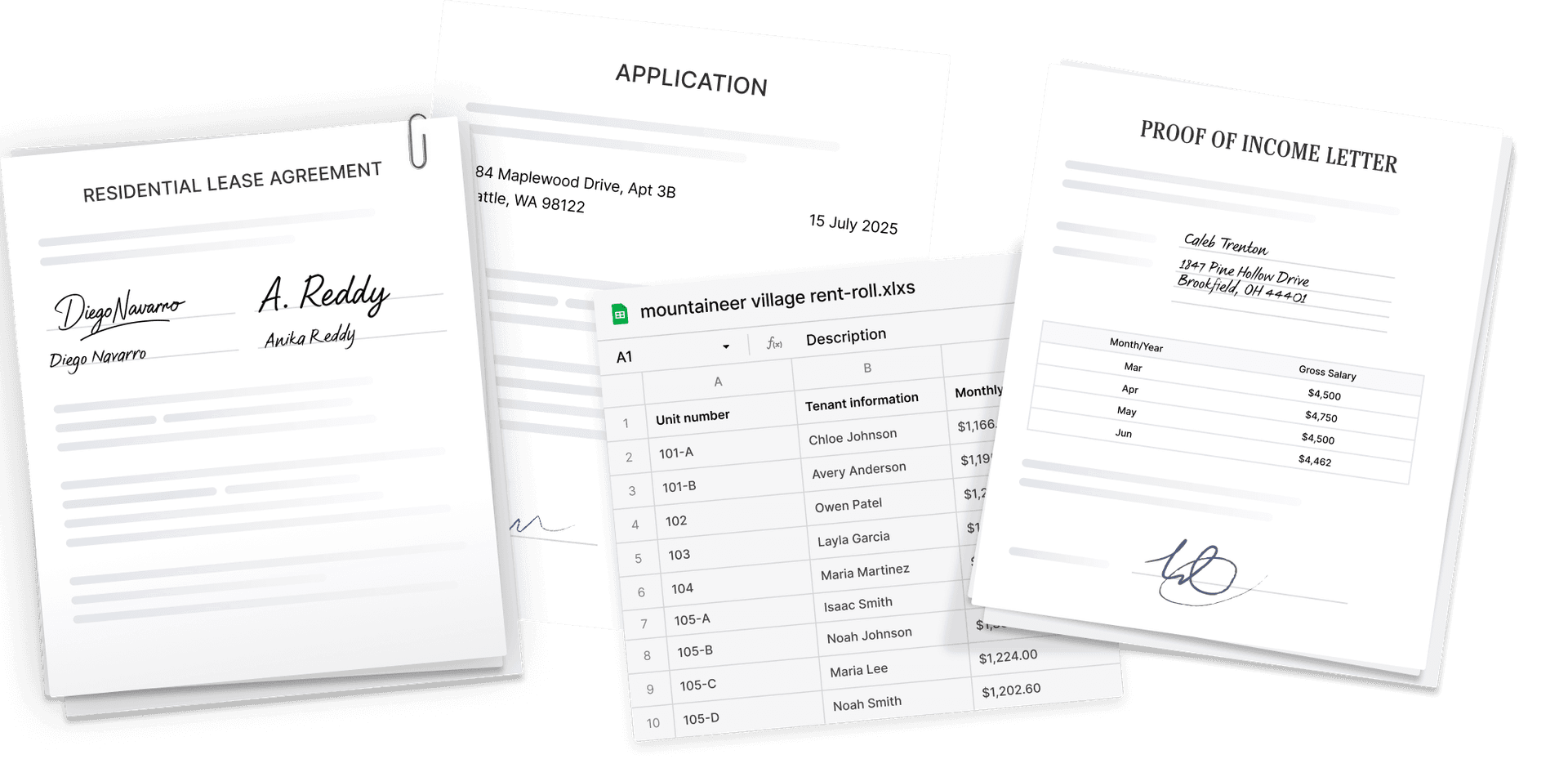
Multifamily property handover documents include the records that define the asset:
- lease agreements and amendments
- rent rolls, resident ledgers, and security deposits
- concession and renewal records
- financial statements and financial records
- compliance and inspection files
- vendor contracts and service agreements
- maintenance and warranty records
These documents are not paperwork for its own sake. They are the proof behind the numbers in the deal. When they are missing, the new owner cannot verify what they bought.
Why Handover Documents Go Missing
Documents rarely vanish through one dramatic failure. They slip away through many small gaps in the transition.
Fragmented Storage
Records live in different places. Some sit in the property management system. Others live on a departing property managers’ drives, in email threads, or in physical files at the property. No single source holds everything, so no single handover captures everything.
Inconsistent Naming and Structure
The old owner organized files their way. The new owner expects them another way. When naming conventions do not match, the team cannot find documents that exist. A lease that is technically present but misfiled is functionally missing.
Incomplete Prior Handovers
Sometimes the gap started before this deal. If property owners never received complete records during their own acquisition, they cannot pass on what they never had. Missing property records compound across ownership cycles.
Compressed Timelines
Handovers happen under deadline pressure. The transition team has limited time to collect, sort, and verify thousands of files. Speed forces shortcuts, and shortcuts leave gaps.
No Verification Step
Most handovers confirm that files were received. Few confirm that they received the right files and that those files are complete. Without a verification step, a handover can look finished while critical records are still missing.
Real estate due diligence depends on having complete, organized, and verifiable records before ownership changes hands. Intralinks notes that missing or disorganized transaction documents can create governance risk, slow review cycles, and make it harder to validate leases, rent rolls, contracts, and other property-level information during an acquisition. See Intralinks’ real estate due diligence checklist for investors.
How Disorganized Records Erode Deal Value
Missing and disorganized handover documents are not just an administrative headache. They carry real financial weight.
Unverifiable Revenue
Underwriting assumes certain rents, charges, and occupancy. Handover documents are what prove those assumptions. When a lease is missing, the buyer cannot confirm the rent it supposedly supports. The revenue becomes an assumption rather than a fact, and the deal value rests on it. Cash flow projections and financial reports built on unverified rents inherit the same risk.
Hidden Liabilities
A missing amendment might contain a concession, a special term, or an obligation the buyer never accounted for. Disorganized records hide these red flags until after close, when they become the new owner’s problem.
Operational Disruption
When site teams cannot find resident records, compliance files, or vendor contracts after a transition, operations stall. Staff spend weeks reconstructing what should have transferred cleanly. That lost time is a real cost, and it lands right when the new owner is trying to stabilize the asset.
Weakened Future Position
A portfolio with disorganized records is harder to sell later. The next buyer will run their own due diligence processes.
Incomplete handover documents will surface again, this time working against the real estate investment. Clean records protect real estate deal value across the full ownership cycle. For related context, see our guide to preventing takeover document errors →
Due Diligence Controls That Reduce Transition Risk
The fix for handover risk is not more effort. It is better controls and disciplined risk management. A controlled handover treats document collection and verification as a defined process with clear checkpoints.
Build a Complete Document Inventory
Start with a master list of every document the handover should include. This inventory becomes the standard for measuring the transition. Without it, the team cannot know what is missing, because they never defined what complete looks like. Our guide to organizing takeover documents walks through building this inventory.
Collect From Every Source
A controlled handover pulls records from every place they live. That means the property management system, the seller’s drives and email, and physical files at the property. Document organization begins with centralizing everything in one place, so nothing stays hidden in a silo.
Match Documents to the Rent Roll
Every occupied unit should have a matching lease. Every charge on the rent roll should trace to a document. Matching handover documents against the rent roll surfaces the gaps that matter most, the ones tied directly to revenue. That gives the buyer an informed decision on what they are actually acquiring.
Verify Completeness, Not Just Receipt
The most important control is verification. Confirm that each required document exists, is complete, and matches the right unit. This step separates a handover that looks finished from one that actually is. It is where the team catches or misses most transition risk.
Prioritize the High-Risk Gaps
Not every missing document carries equal weight. A missing lease on an occupied unit is a revenue and compliance risk. A missing minor notice may not be.
Controlled handovers rank the gaps by financial and compliance impact. The team then addresses the most consequential due diligence risks first. For more on what causes these gaps, see our breakdown of causes of missing takeover documents →
Where Technology Changes the Handover
Manual handover controls work, but they strain under volume. A large portfolio of rental properties can involve tens of thousands of documents. Checking each one by hand is slow and inconsistent.
Automated Document Classification
Software can sort incoming handover documents automatically, identifying leases, amendments, and compliance records without manual review. That turns a pile of files into a structured, searchable set.
Automated Matching and Validation
Technology can match documents to units and flag what is missing. It compares the handover set against the rent roll and required-document list. Instead of a person hunting for gaps, the system surfaces them.
Continuous Verification
The strongest approach does not stop at close. It keeps validating records in real time, so it still catches gaps that surface later. That protects the asset well past the transition itself.
AI is increasingly being used to reduce the manual burden of high-volume document review during transactions. Datasite notes that AI-assisted diligence can standardize repetitive document review, extract key terms from leases and commercial contracts, and help teams work through large volumes of information more efficiently while keeping human review in the process. See Datasite’s analysis of AI in due diligence.
How SurfaceAI Supports Handover Controls
SurfaceAI helps multifamily operators, property management companies, and their teams run handovers as a controlled process. Two agents support the handover.
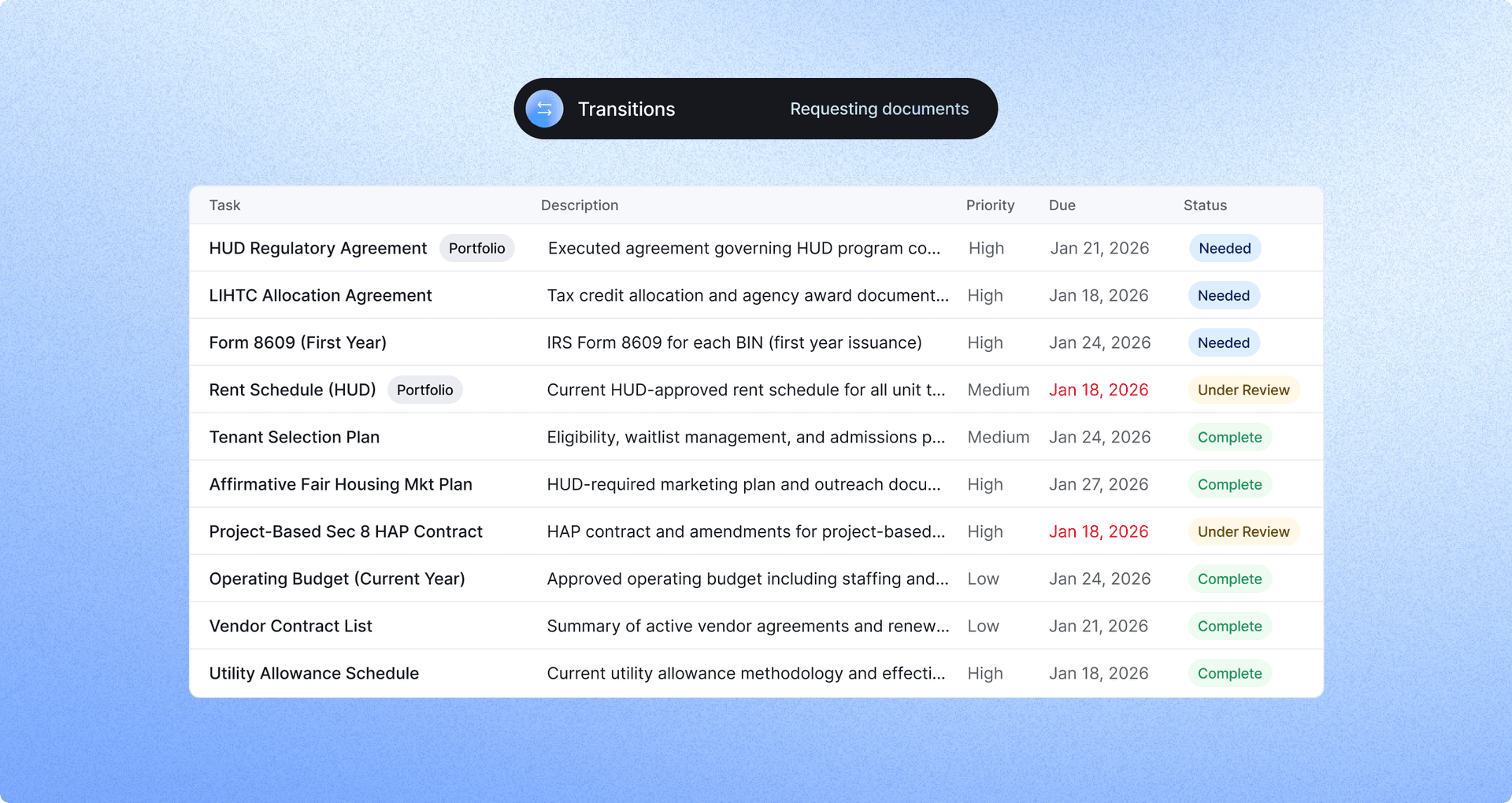
The Transitions Agent is designed for the pre-close handover. It aims to reach prior owners and managers, collect the scattered files a transition depends on, and check them against a required-document list before cutover. The goal is to surface what is missing early, so the incoming team does not discover gaps after close.
The Document Management Agent handles the records once they arrive. It classifies handover documents, organizes them, and loads them into the property management system. It matches documents against the rent roll and flags what is incomplete or mismatched.
SurfaceAI does not replace the property management system. It validates the records flowing into it during a transition. The new owner starts from verified data rather than a stack of unchecked files.
The incoming management company and its management team gain confidence. The asset they bought matches the documents they received.
Conclusion
A handover is not a formality. It is the moment a deal’s value is either protected or quietly lost.
Multifamily property handover documents go missing through fragmented storage, inconsistent structure, compressed timelines, and the absence of a verification step. Those gaps erode deal value by making revenue unverifiable and liabilities invisible. The fix is a controlled handover. Build a complete inventory, collect from every source, match against the rent roll, and verify completeness.
Do you want to run handovers with real controls and start every transition from verified records? Book a demo to see how SurfaceAI reduces transition risk.
Frequently Asked Questions About Multifamily Handover Controls